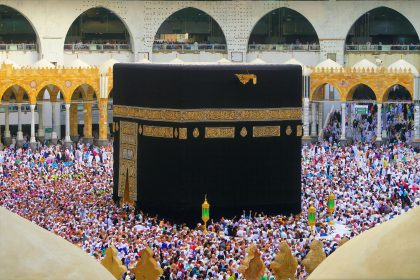
This is a reading of the article “Orientalism and Colonialism: Critical Reading,” originally published in the first Preinaugural issue of RISE journal.
The text delves into the intricate and historically loaded relationship between Western scholarship and European imperial expansion. Building upon foundational academic critiques—most notably Edward Said’s groundbreaking framework—the article examines how the “Orient,” and specifically the Islamic world, was artificially constructed by Western academics, writers, and politicians. Rather than reflecting an objective reality, this construction served to define the East as the fundamental “Other” in contrast to a supposedly rational and superior West.
The reading highlights that Orientalism was rarely a neutral pursuit of knowledge. Instead, it functioned as an intellectual tool that directly justified and facilitated colonial domination. By stereotyping Islamic societies as stagnant, irrational, and in need of saving, European powers were able to mask their conquests as a “civilizing mission.” The article explores how these historical biases deeply influenced early Islamic studies, shaping translations, historical narratives, and political policies while actively marginalizing indigenous Muslim voices.
Furthermore, this critical reading underscores the ongoing legacy of these power dynamics today. It urges audiences to remain vigilant against modern manifestations of Orientalist tropes in contemporary media, foreign policy, and academia. Ultimately, the piece calls for a decolonized approach to studying the Islamic world—one that reclaims agency, dismantles Eurocentric narratives, and engages with Islamic history on its own terms. This audio presentation captures the essence of that critique, offering a vital look at how knowledge and power intersect.