
Tag: Jurisprudence

RISE Articles 8
Jurisprudence of Money Volume 2

Publication of the Second Volume of the Book “The Jurisprudence of Money”: An Ijtihadi Examination of Banking Jurisprudence and Loan Usury

The second volume of the specialized book “The Jurisprudence of Money” (Fiqh-e Pul), available in both Arabic and Persian, has been released into the publishing market by the Publications of the Management Center of the Qom Seminary. This work constitutes the transcripts of the advanced jurisprudential lectures (Dars-e Kharij) of Professor Mohammad Taqi Shahidi, focusing […]

Jurisprudential Issues in Artificial Intelligence

The Jurisprudential Formulation of Artificial Intelligence: An Endeavor to Address Emerging Technological Challenges

The book A System of Jurisprudential Issues Regarding Artificial Intelligence, authored by Abdolhojjat Haghjou, has been published under the auspices of the Art and Media Jurisprudence Department at the Aemmeh Athar Fiqh Center. Aimed at advancing jurisprudential studies in the realm of modern technologies generally and addressing jurisprudential issues in Artificial Intelligence specifically, this work […]

Deception in Islamic Jurisprudence: An Analysis

“The Jurisprudential Ruling on Deception”: A Response to a Major Ethical and Social Issue

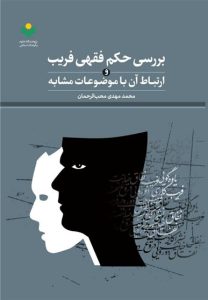
The publication of the book “An Analysis of the Jurisprudential Ruling on Deception and Its Relation to Similar Concepts” can be considered a jurisprudential response to one of the most complex ethical and social concepts in contemporary life. Deception in Islamic jurisprudence is a concept that has transcended the level of individual behavior and has […]

5th International Conference on New Achievements in Religious Sciences and Human Studies in Iran and the World (Tehran)

5th International Conference on New Achievements in Religious Sciences and Human Studies in Iran and the World (Tehran)

The 5th International Conference on New Achievements in Religious Sciences and Human Studies in Iran and the World will be held in Tehran on March 1, 2026. The event is organized by the International Center for Conferences and Seminars on Sustainable Development of Islamic World Sciences. This prestigious academic gathering provides a platform for scholars, […]

Publication of Philosophy of Political Jurisprudence

Publication of Philosophy of Political Jurisprudence

The Islamic Sciences and Culture Academy has recently published a book entitled Falsafih-yi Fiqh-i Siyāsī (The Philosophy of Political Jurisprudence), authored in Persian by Hujjat al‑Islam Seyyed Sajjad Izdehi. This 416‑page volume represents a novel attempt to elucidate the foundations, scope, and capacities of political and governmental jurisprudence. Adopting a philosophical perspective, Izdehi approaches the […]

Volume Eight of “Ask Me Before You Lose Me: A Commentary on Nahj al-Balāgha” by Grand Ayatollah Javadi Amoli Published

The eighth volume of the distinguished series Salūnī Qabla ʾan Tafqidūnī: Taḥrīr-i Nahj al-Balāgha (Ask Me Before You Lose Me: A Commentary on Nahj al-Balāgha), authored by Grand Ayatollah Javadi Amoli, has been published in Persian by Isrāʾ Publication. Comprising 680 pages, this volume represents another contribution to the scholarly and ethical endeavors of this […]

Publication of the Book "Jurisprudence and Security: Security Studies in the Shiʿa Jurisprudential Tradition"

Publication of the Book “Jurisprudence and Security: Security Studies in the Shiʿa Jurisprudential Tradition”

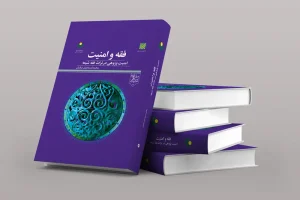
The book Fiqh wa Amniyyat: Amniyyat-pazhūhī dar Turāth-i Fiqh-i Shīʿa (Jurisprudence and Security: Security Studies in the Shiʿa Jurisprudential Tradition), authored in Persian by Mohammad Esmaeil Nabatian, has been published by the Islamic Sciences and Culture Academy Press in 515 pages. The work seeks to extract and analyze jurisprudential propositions related to security through a […]

Scholaria Contributions 1

From Deepening Philosophical Foundations to the Philosophies of Disciplines: A Roadmap for the Transformation of Islamic Humanities

This essay proposes a three-layered framework—comprising the philosophy of disciplines, the humanities, and jurisprudence—to systematically develop Islamic humanities. It emphasizes an active, productive encounter with Western thought, the necessity of contemporary Quranic exegesis, and a structured methodology for integrating sacred religious principles into modern academic disciplines.