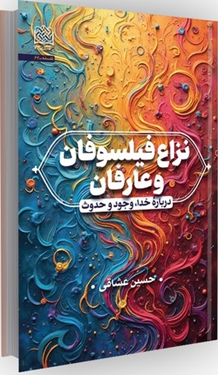
The book The Dispute between Philosophers and Mystics on God, Existence, and Temporal Origination, authored by Hossein Oshshaqi, has been published by the Research Institute for Islamic Culture and Thought. This 360‑page work, written in Persian, adopts an analytical approach to examine the divergences between philosophers and mystics regarding fundamental concepts in Islamic theology.
Three central themes are addressed:
- The nature of the Necessary Being (wājib al‑wujūd bi al-dhāt).
- The affirmation of attributes at the level of the divine essence.
- The relationship between creation and the Creator.
Both traditions agree that the Necessary Being is identical with existence and reject any composition of essence and existence in God. However, their interpretations differ: mystics regard the essence of the Necessary Being as “unconditioned existence” (wujūd lā bi‑sharṭ), unrestricted by any particularity, whereas many philosophers interpret it as “specific existence” endowed with determinate characteristics.
By analyzing these disputes, the book explores the roles of reason and intuition in apprehending the divine essence, demonstrating how philosophical and mystical traditions arrive at distinct theological conclusions. Drawing upon both philosophical and mystical sources, the author provides a systematic account of these disagreements and facilitates comparative study between the two approaches.