
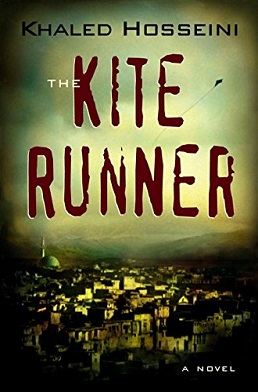
The book has good prose and is very readable, likely due to extensive (triple?) editing. It is compelling because of the picture it paints of Afghanistan and the cultural proximity (to us Iranians). Other appealing aspects include the relatively well-developed characters and the overall theme of the story. But in terms of content and significance, the book is living proof of America’s success in both military warfare and narrative warfare. You wonder how it so artfully pins all of Afghanistan’s misery on the Soviets and the Taliban, while casting America as the angel of salvation. Who provoked the Soviets into invading Afghanistan in the first place? One side of that coin was America’s Cold War follies. Without repeated U.S. interventions from the other side of the world, why would the Soviets have wanted to incur such a cost—one that effectively led to their decline? The Soviets were no better than the Americans in meddling far from home, but the point is America was not entirely blameless. And the Taliban didn’t spring from the cracks in the wall; the Taliban was created, armed, and equipped by America to fight the Soviets. Playing with people’s security in the madness of the Cold War. Now, in this book, the author who an Afghan diplomat’s son, thoroughly Westernized -or better put, westoxicated- in love with America, has so artfully—though it is also glaringly obvious, to those who know—portrayed America as the savior angel and promised land, you should see it. In this book, Afghanistan under the Soviets and then the Taliban is a hell that would be unbearable without America’s presence. Later, I learned that this book was unveiled and promoted around 2004 and sold remarkably well—the first book by a non-native author. The draft went back and forth between editor and author three times before it reached the publication stage (that is, when you are determined to push something into print under someone’s name), and when it came out, boom! It exploded. Why then? Because it was exactly the right time, when the average American was asking: Why are we in Afghanistan? After two or three years, with the heat of September 11 cooled, the American public was wondering, Why are we still there? And what better narrative to justify America’s presence in Afghanistan than this book, written by an Afghan, well-written, engaging, dramatic: great and redeeming America must be there. The bootlicking of America in some scenes was so over-the-top it became nauseating. Even the grumpy charge d’affaires at the U.S. embassy in Islamabad is excused for his bad temper because he lost his son in the war in Afghanistan defending the helpless Afghan people—but that’s not enough; surely an occasion must arise to reveal just how tender-hearted and kind this “Gold Star father” truly is, and that his rudeness was all a misunderstanding. How selfless he is. So if you ever see rudeness in occupying soldiers and officials, know that their job is very hard and they are making great sacrifices. Oh, how much you must be a bootlicker of the invader and occupier of your homeland to so artfully paint the crow in peacock’s feathers. Well, the author was rewarded, too. With the help of a good three rounds of editing and such, he produced a book certainly beyond his own caliber, gained fame, became a celebrity, had a personal meeting with Bush and his wife, and countless other benefits. The tragedy is that on this side—Afghanistan and Iran—this book also became the master narrative of contemporary Afghan history, complete with minute and emotionally captivating imagery, for young men and women, for anyone who knows next to nothing about Afghanistan. Later I heard that another diplomat’s child wrote a similar book about their own homeland, Iraq. I should read it; I doubt it is as treacherous as this one. I used to hold envoys from poor countries serving in developed nations with suspicion. Now I must see the continuation of those same betrayals in their children. Their fathers are leeches who steal from the wealth of their impoverished nation to live comfortably and secure their position in developed countries, and—as Imam Khomeini put it—do whatever it takes to uphold the domination of those very powers over their wretched homelands. And the children, those spoiled kids who, after attending Western schools, adopting a luxurious lifestyle, and holding green passports, feel no sense of duty toward their homeland and actually despise it. Their best memories are from the countries where their fathers were posted! Their worst memories are from childhood trips to that backward, dusty, filthy ancestral homeland. Anyway, as compelling as it was, I was filled with hatred reading this book—and also with a kind of bitter admiration for America. How successful it is in the battle of narratives across all scales.
Farvardin 1400 (March–April 2021)