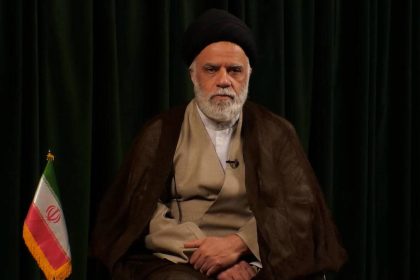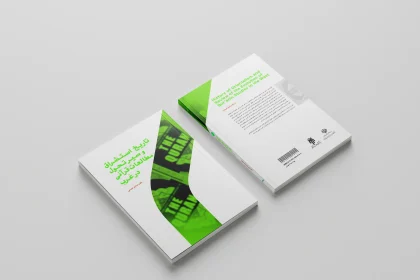

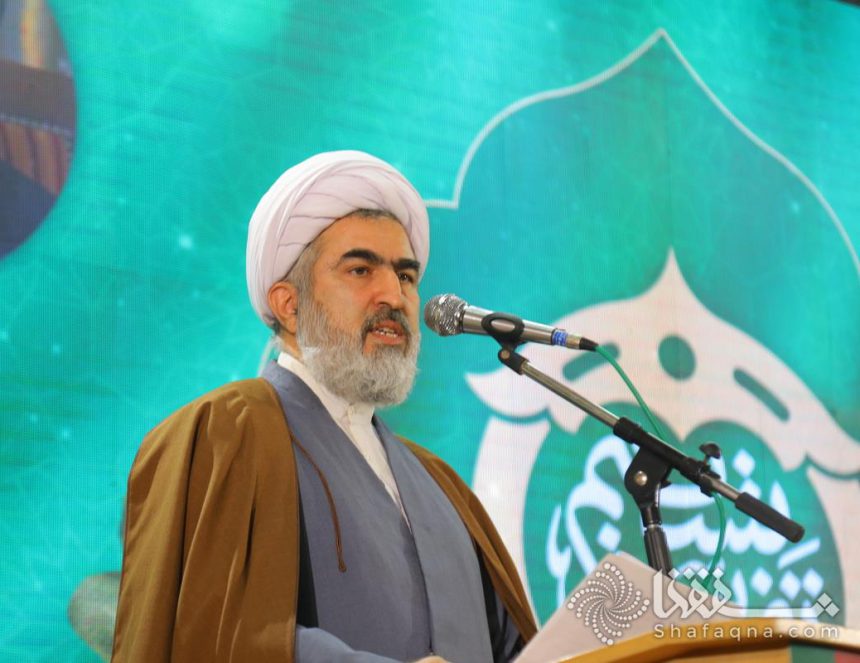
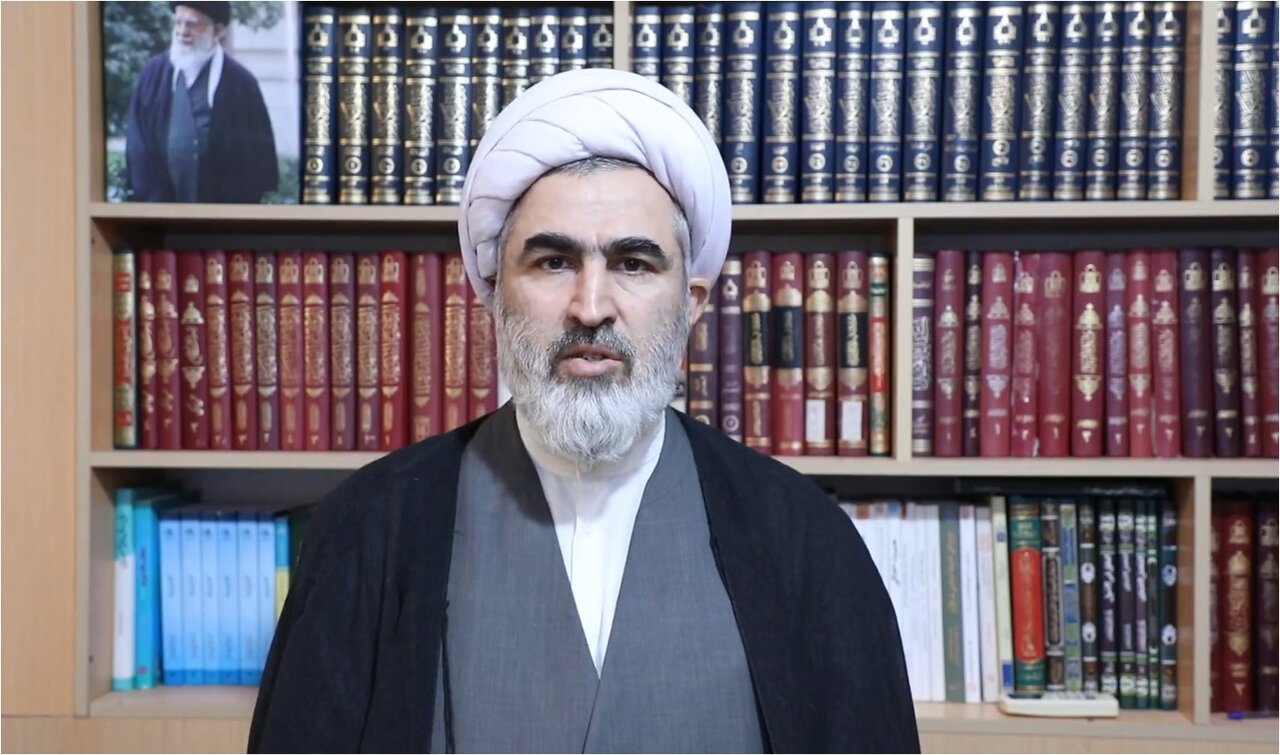
On the occasion of the Qom Seminary Centennial, RISE sat down with Hujjat al-Islam Moqimi Haji, Secretary of the Conference on the Centennial of the Re-establishment of the Qom Seminary, to discuss its landmark scholarly output.
Why the Qom Seminary Centennial Matters
RISE:
Dr. Moqimi, thank you very much for giving us your time today. Recently, on the occasion of the centennial of the re-establishment of the Qom Seminary (Ḥawza), the collected volumes of the conference were published. This project—a comprehensive effort to document a century of intellectual and institutional transformation—has drawn the attention of many scholars of Islamic sciences. To begin, I would like to pose a foundational question. For those in our audience who may not be familiar with its historical background, would you explain the historical significance of the Qom Seminary and the necessity of commemorating the hundredth anniversary of its re-establishment?
Hujjat al-Islam Moqimi Haji:
The seminaries have been among the most important centers for producing and disseminating Qurʾanic knowledge, defending the religion of Islam, and promoting the teachings of the Islamic tradition. Over more than a millennium, they have trained hundreds of leading scholarly and religious figures and produced thousands of scholarly works in various fields of religious and seminary sciences.
With the migration of the Ashʿarī clan—Shīʿī in their orientation—to Qom in the 2nd century AH, the city witnessed the presence of several early muḥaddiths (scholars and narrators of ḥadīth) who may rightly be considered the founders of what we can call the “twelve-hundred-year-old seminary of Qom.” Among these scholars were ʿĪsā b. ʿAbd Allāh, ʿImrān b. ʿAbd Allāh, and Isḥāq b. ʿAbd Allāh al-Ashʿarī, all of whom are remembered as muḥaddiths and jurists of Qom and as companions of Imām al-Ṣādiq (a) and Imām al-Kāẓim (a). Another prominent scholar of Qom was Zakariyyā b. Ādam, about whom Imām al-Riḍā (a) stated: “He is trustworthy and reliable in religious and worldly matters.” Muḥammad b. ʿĪsā b. ʿAbd Allāh and his son Aḥmad were likewise among the distinguished scholars of the early Qom center.
This intellectual tradition in Qom later continued through figures such as Ibn Qūlawayh al-Qummī and Shaykh al-Ṣadūq, and by the 4th century AH it had achieved remarkable vitality. In later centuries as well, partly due to Qom’s central geographical position in Iran and partly due to the presence of the shrine of Lady Fāṭima al-Maʿṣūma (a), this scholarly current persisted—though with periods of ebb and flow. Shaykh ʿAbd al-Jalīl al-Rāzī, author of al-Naqḍ, describes the scholarly standing of Qom in the 6th century AH as follows:
“Qom’s religious schools possess ample facilities, and their teachers, scholars, and exegetes are prominent; their libraries are filled with works representing a variety of intellectual traditions.”
Al-Rāzī names nine schools, including the Āstāna School adjacent to the shrine, which later became known as the Fayḍiyya School after the residence and stewardship of Mullā Muḥsin Fayḍ Kāshānī. Scholars such as ʿAbd al-Razzāq Fayyāḍ Lāhījī, Qāḍī Saʿīd, Mullā Ṭāhir Qummī, and Mīrzāyi Qummī were among the figures who flourished in these institutions in subsequent eras.
Prior to the last century as well, scholars such as Āyatullāh Shaykh Abū al-Qāsim Kabīr Qummī, Mīrzā Muḥammad Arbāb Qummī, Āyatullāh Shaykh Mahdī Ḥikamī Pāʾīn-Shahrī, and Mīrzā Muḥammad Fayḍ Qummī held teaching positions in the city. These scholars helped prepare the ground for the revival and strengthening of the Qom Seminary by inviting Āyatullāh Ḥāʾirī to settle in the city in 1301 SH (1340 AH). His arrival marked the re-establishment of the Qom Seminary and initiated a profound transformation across intellectual, political, and cultural domains in Iran and beyond. This “blessed tree” (al-shajarat al-ṭayyiba) flourished further with the presence of Āyatullāh Burūjirdī and eventually paved the way for the Islamic Revolution under the leadership of Imam Khomeini and the beginning of a new era.
Following the Islamic Revolution, the Qom Seminary witnessed the emergence of new scholarly disciplines and significant growth in its educational, research, and institutional dimensions—developments that distinguish this period from earlier ones.
In order to revisit and reflect on the scholarly activities of the Qom Seminary, the Supreme Council of the Seminaries placed on its agenda the “Conference on the Centennial of the Re-establishment of the Qom Seminary and the Commemoration of Grand Āyatullāh Ḥāʾirī Yazdī.” The conference sought, on the one hand, to revive the works of Āyatullāh Ḥāʾirī, and on the other, to present the full spectrum of the seminary’s scholarly and institutional achievements over the past century.
The Mawsūʿa of Āyatullāh Ḥāʾirī Yazdī
RISE:
You mentioned that the conference pursued two primary domains. Let us begin with the first, which appears to focus on the personality of the founder, Āyatullāh Ḥāʾirī Yazdī. Would you please elaborate on this section and its concrete output—namely Mawsūʿat al-Muḥaqqiq al-Ḥāʾirī al-Yazdī?
Hujjat al-Islam Moqimi Haji:
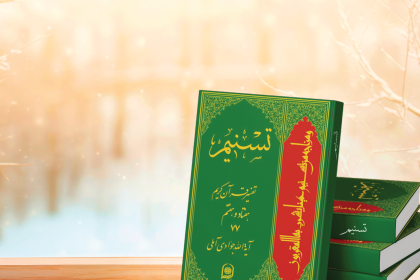
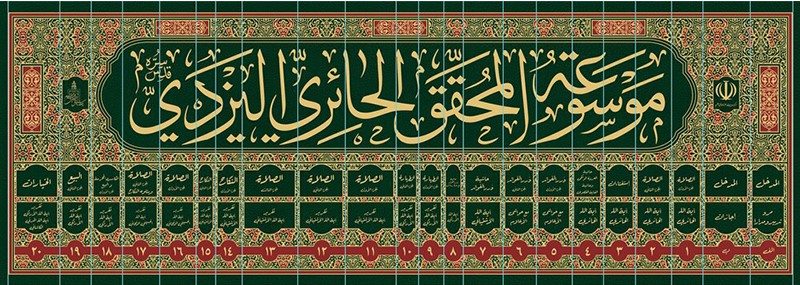
The revival of his works was completed in a 22-volume work under the title Mawsūʿat al-Muḥaqqiq al-Ḥāʾirī al-Yazdī. Two volumes, titled al-Madkhal, are devoted to his biography, source-studies, and Ijāzāt[1]. The remaining twenty volumes consist of his own written works or his lectures as authored by his students (taqrīrāt).
Five specialized committees were responsible for reviving the works of Āyatullāh Ḥāʾirī and producing scholarly articles related to him:
- Committee for Text Revival
- Committee for Documents and Archival Materials
- Committee for Fiqh (Jurisprudence), Uṣūl (Principles of Jurisprudence), and Rijāl (Biographical Evaluation)
- Committee for History and Sīra (Lifestyle & Conduct)
- Committee for Political and Social Studies
It is worth noting that materials concerning his life, intellectual positions, and personal traits are presented in the first volume. Following the biographical section and a presentation of his views, the volume includes recollections from students and scholars, as well as numerous documents related to him. Furthermore, articles that address various aspects of Āyatullāh Ḥāʾirī’s scholarly and pedagogical activities—his ethics, spiritual discipline, preaching activity (tablīgh), political stances regarding Palestine, his approach to the ruling government, and his social services—were published in several academic journals and in various volumes of the Centennial Mawsūʿa.
Within the section on Ijāzāt, 210 Ijāzāt have been published. Of these, 90 are Ijāzāt issued directly by Āyatullāh Ḥāʾirī Yazdī; the rest consist of his marginal notes on the Ijāzāt of other scholars.
The Ijāzāt fall into eleven categories. The most numerous are Ijāzat al-Ijtihād[2] (110 cases) and Ijāzāt concerning umūr ḥisbiyya[3] (66 cases). Other categories—such as permission to narrate, permission to teach, stewardship of endowments, certification of academic engagement, authorization to administer the Khums, permission for preaching and guidance, authorization to teach legal rulings, leave for preaching activity, and travel permits—appear in smaller numbers.
This Mawsūʿa was produced over four years through the efforts of a large team of scholars and researchers and has been organized in a modern, technically refined, and updated format by the Secretariat of the Conference. It should be mentioned that with the critical edition of several additional taqrīrāt, the total number of works by Āyatullāh Ḥāʾirī could be expanded to thirty volumes—a goal we hope will be realized in the future.
RISE:
What would you identify as the defining features of Mawsūʿat al-Muḥaqqiq al-Ḥāʾirī?
Hujjat al-Islam Moqimi Haji:
The Mawsūʿa has several notable characteristics:
- Comprehensive Compilation and Unified Presentation
Works that had previously been published in scattered form are now presented within a single, coherent framework. - Completion of Textual Collections
One-third of the istiftāʾāt[4] missing from earlier editions appear here for the first time. Likewise, portions of Āyatullāh Ḥāʾirī’s marginalia on his uṣūlī work Durar al-Fawāʾid are newly included. While the book was previously published with only one set of marginal notes, this Mawsūʿa presents it with additional glosses. Moreover, the marginalia of Āyatullāh Arākī and Āyatullāh Āshtiyānī on Durar al-Fawāʾid have been printed separately. - Revival of Rare Works
Several works that had been out of circulation for decades—such as the Ḥāshiya ʿalā al-ʿUrwat al-Wuthqā and al-Ghāyat al-Quṣwā—have been republished. - Critical Edition
Earlier texts—including the books on Ṣalāt (prayer) and Nikāḥ (marriage) by Āyatullāh Āshtiyānī and the collections of istiftāʾāt, which suffered from numerous errors—have been carefully revised in this edition. - Scholarly Editing with Full Documentation
All texts have been critically edited, with sources identified and referenced. - First-Time Publication of Certain Works
Some materials, such as the complete collection of ijāzāt, are being published in their entirety for the first time.
RISE:
This level of precision in reviving a scholar’s corpus underscores his significance. Now, let us turn to the second and broader component of the project: documenting the scholarly and institutional achievements of the entire Ḥawza of Qom over the past century. What were your main objectives in this section?
Hujjat al-Islam Moqimi Haji:
The Centennial Collection of the Re-establishment of the Ḥawza of Qom pursued a range of goals aimed at presenting the achievements of the Qom Seminary across both intellectual and institutional dimensions:
- Introducing the scholarly accomplishments and academic orientations of the Qom Seminary in the last century, especially in the post-Revolution period;
- Presenting its prominent and influential personalities;
- Showcasing innovative and transformative scholarly theories;
- Identifying important sources, books, treatises, taqrīrāt, and noteworthy scholarly circles of the past century;
- Presenting the structure, organization, and institutional evolution of the clergy and ḥawza-related institutions over the century;
- Introducing the seminary’s educational, research, ethical, preaching, and media-related activities;
- Highlighting the cultural-preaching, social, political, and economic services of the ḥawza;
- Explaining the relationship between the Qom Seminary and the governing system;
- Mapping the role and position of the Qom Seminary in the sphere of Islamic civilization and the international arena.
RISE:
Achieving such wide-ranging objectives requires a precise methodological framework and a highly organized scholarly structure. Would you explain the scientific architecture of this large-scale project and the process by which it was implemented? How did you manage and evaluate such an extensive body of information?
Hujjat al-Islam Moqimi Haji:
In line with the aforementioned goals, the books and articles of this conference were organized within a subject-based scholarly structure consisting of twenty-two academic fields and six performance-oriented fields.
1. Academic / Knowledge-Based Groups
- Tafsīr (Exegesis) and Qurʾānic Studies
- Ḥadīth Sciences and Teachings and Rijāl
- Fiqh and Uṣūl
- Ethics and Spiritual Refinement
- Kalām (Islamic Theology), Religions, Islamic Sects, and Mahdism Studies
- Philosophy
- ʿIrfān (Islamic Mysticism),
- Islamic History, Sīra, and Biographical Studies
- Contemporary History and the Islamic Revolution
- Social Studies
- Political Sciences
- Law
- Educational Sciences
- Psychology
- Economics
- Management
- Arabic Literature
- Persian Language, Literature, and the Arts
- Media and Communications
- Cyberspace and New Technologies
- Encyclopedic Studies, Lexicography, and Mawsūʿa-writing
- Strategic Studies
2. Performance-Oriented Groups
- Education
- Research
- Preaching Activity (Tablīgh)
- Cultural, Social, and Political Services
- Civilization and International Affairs
- Institutions
RISE:
How did the work process unfold, and what mechanisms did you follow for accepting scholarly contributions?
Hujjat al-Islam Moqimi Haji:
The workflow proceeded through several stages:
First, the Secretariat of the Centennial Conference on the Re-establishment of the Ḥawza of Qom established a Policy Council and a Scholarly Council, composed of senior scholars and experienced researchers of the seminary, to define the major scholarly guidelines and overarching policies. Then, a public call for papers was announced at two levels: (a) full-length scholarly works and (b) selected shorter contributions.
Next, for each academic and performance-related field, groups of approximately five experts were formed to determine, approve, and commission the topics, books, and articles. Qualified researchers with established expertise were identified and invited to author specific works.
Upon receiving the drafted books and articles, they underwent evaluation, revision, and review within the respective academic and performance groups. Subsequently, the Secretariat conducted an additional layer of scholarly and procedural oversight. In the final stage, the Conference’s Scholarly Council—composed of specialists across disciplines, under the high-level supervision of Āyatullāh Ustādī—approved the works after scientific and literary editing.
From the academic groups alone, at least three hundred scholarly articles were submitted. From the performance-oriented section, no fewer than five books and over sixty articles were received.
To ensure academic rigor and maintain high standards, the evaluation of these works was carried out by leading experts in the relevant fields. Unlike some conferences, the revision process here often required multiple rounds. In certain groups, researchers worked closely with authors to refine, supplement, and document the articles in line with the conference’s structural and scholarly requirements.
To disseminate the seminary’s achievements and the results of the scholarly groups’ efforts, approximately 23 reputable academic journals—including scholarly-research, scholarly-promotional, and specialized journals—have thus far published articles produced within the Secretariat’s framework.
RISE:
The collaborative efforts of the authors and research teams have produced an extensive body of writing. What unique features characterize this collection?
Hujjat al-Islam Moqimi Haji:
The collective work of the scholars and contributors to the Centennial Project has resulted in a corpus distinguished by the following features:
- Comprehensive Reporting
A full account of the scholarly and institutional achievements of the Qom Seminary over the past century—especially the emergence of new academic disciplines after the Islamic Revolution and the seminary’s performance in this period. - Introduction of Leading Figures
Presentation of the religious authorities, distinguished scholars, and researchers of the past century, along with their contributions to elevating the academic and institutional stature of the Ḥawza and training capable and learned scholars. - Scholarly Referencing
Despite inevitable limitations, the collection strives to provide essential information and analytical insight, giving readers a comprehensive overview of each field’s scholarly and institutional development during the past hundred years. With extensive references to primary and authoritative sources, it serves as a dependable reference point for researchers—minimizing the need to consult additional works except for detailed inquiries. - Documentary, Not Critical
The guiding principle behind the articles and books was to present documented reports of achievements and outputs—not to pursue critical analysis. Nevertheless, by tracing the historical development of disciplines and institutional practices, the collection offers useful material for various analytical approaches. - Multi-Period Developmental Perspective
Most contributions review the historical trajectory and multi-stage development of the seminary, including:the foundational era under Āyatullāh Ḥāʾirī and the Marājiʿ Thalāth (Āyatullāh Ṣadr al-Dīn Ṣadr, Āyatullāh Ḥujjat Kūhkamaraʾī, and Āyatullāh Khānsārī),
– the consolidation and expansion era under Āyatullāh Burūjirdī,
– the period from the demise of Āyatullāh Burūjirdī to the Islamic Revolution, and
– especially the era of Imam Khomeini and the post-Revolution period, marked by significant growth in educational, research, and preaching institutions. - Post-Revolution Scholarly Impact
The collection documents the seminary’s growth after the Islamic Revolution—the fruit of Imam Khomeini’s struggle—and includes articles on his intellectual foundations and influence. It details the development and fluctuations of ḥawza disciplines, the expansion of scholarly output, and the seminary’s responses to new questions, contemporary issues, and societal needs, as well as its role in shaping the Islamic system. - Addressing Misconceptions
Through documented evidence, the collection implicitly or explicitly responds to misconceptions and inaccurate claims about the role and status of the clergy and the Qom Seminary—particularly in the past century. - Scholarly Interaction and Mutual Influence
It clarifies the scholarly exchanges and reciprocal influence between the Qom Seminary and seminaries across Iran and abroad—especially the longstanding and profound relationship with the Najaf Seminary. - Explaining the Seminary’s Foundational Role
The collection highlights the central role of the Qom Seminary in the Islamic Revolution and the Islamic Republic, and its foundational contribution to the emergence of a new Islamic civilization. - Comprehensiveness of Foundational Topics
The articles collectively address all major subjects relevant to the Ḥawza of Qom over the past century. Within each article, comprehensiveness is maintained according to the scope of the topic. Some intended subjects, due to complexity, lack of data, or insufficiently developed contributions, were withheld from publication—matters that should be addressed in future editions. - Documentation and Use of Primary Sources
A strong emphasis on authenticity, relying on first-hand and authoritative texts in each field. - Scholarly Tone and Method
Adherence to academic decorum: avoiding digression, bias, and polemics; maintaining scholarly etiquette; and refraining from harmful or inflammatory discussions while presenting facts accurately.
Achievements of the Qom Seminary Centennial Conference
RISE:
What have been the scholarly and performance-oriented achievements of the Qom Seminary Centennial Conference on the Re-establishment of the Ḥawza of Qom, and what activities have been undertaken in this regard?
Hujjat al-Islam Moqimi Haji:
These achievements can be discussed in several domains:
A) Qom Seminary – Knowledge Production
Over the past century, the Qom Seminary has been known for three main philosophical and scholarly schools: the Ṣadrāʾī philosophical school, the revivalist ḥadīth school, and the rationalist uṣūlī school. After the Islamic Revolution, it expanded into Islamic humanities, applied philosophies, and jurisprudence of social systems, charting a path of scientific innovation.
Prominent figures such as ʿAllāma Ṭabāṭabāʾī, Imam Khomeini, Shahīd Muṭahharī, Javādī Āmulī, Miṣbāḥ Yazdī, Subḥānī, and Makārim Shīrāzī have each made influential contributions in philosophy, Qurʾānic exegesis, jurisprudence, and religious governance.
Knowledge production in Qom has resulted in the publication of thousands of books and hundreds of academic journals, and the traditional ḍarṣ-i khārij system has evolved into an organized research and educational framework. The historical development of the seminary spans from the pre-Revolution consolidation of traditional ijtihād to the post-Revolution expansion of research centers, jurisprudential theorization, and the connection between religion and civilization.
The seminary’s engagement with new knowledge evolved from cautious interaction with Western philosophy to active dialogue within the framework of Islamic humanities. Its approach to governance shifted from political abstention to fiqh of wilāyat (guardianship) and religious system-building. Scholarly opposition to deviant movements—such as Wahhabism, secularism, and emerging forms of mysticism—has been pursued through debates, analytical works, and training critical thinkers. Specialized bibliographies in fiqh, philosophy, and Islamic humanities, as well as databases like Noormags and Research Institute of Hawzah and University, showcase the seminary’s scholarly legacy and establish it as a primary global reference for Islamic knowledge.
B) Seminary – Spiritual Training and Ethical Development
- Introduction of the seminary’s spiritual and ethical programs over the past century.
- Typology of seminary methods in ethical and educational training.
- Presentation of moral scholars and their pedagogical approaches.
- Overview of seminary institutions, activities, and outputs—including treatises, books, and lecture notes related to ethics and training.
- Role of the seminary and its learned scholars in the spiritual development of society and governance in the last century, as well as the role of seminary graduates in confronting pseudo-spiritual trends.
C) Seminary – Education and Research
- Identification of major educational and research methodologies of the Qom Seminary over the past century.
- Description of structural and organizational transformations in education and research.
- Educational approaches in Islamic and human sciences, and methodological innovations.
- Interaction between seminary education/research and other institutions.
- Functional analysis of educational and research centers affiliated with the seminary.
- The seminary’s scholarly role in national educational systems, responding to societal and revolutionary needs, and the impact of the Islamic Revolution on these processes.
D) Seminary – Preaching and Media Activities
- Clarification of the role of the religious authorities in reviving preaching activity.
- Presentation of seminary preaching institutions over the past century.
- Adoption of modern technologies and the evolution of preaching methods from traditional to contemporary, comprehensive, and virtual approaches.
- Introduction of successful preachers within Iran and abroad.
E) Seminary and the Clerical Organization
- Identification and reintroduction of scholars in fiqh, philosophy, kalām, ethics, ʿirfān, etc. over the past century.
- History of institutional formation in the Qom Seminary and analysis of their social, cultural, and political functions—including women’s seminaries, Jāmiʿat al-Zahrāʾ, Jāmiʿat al-Muṣṭafā, etc.
- Historical development of educational and research institutions.
- Analysis of the seminary’s relations with external institutions, including universities—scientific collaboration, training personnel, and organizational partnerships.
- Management methods of Qom Seminary schools over the past century.
F) Seminary and the System (Revolution and Islamic Republic)
- Clarifying the Qom Seminary’s role in the Islamic Revolution and its intellectual support.
- Seminary contributions to legislation in the contemporary period.
- The seminary’s role in the structures of the Islamic Republic of Iran.
- Presentation of seminary-specific institutions within the Islamic Republic and their functions (e.g., The World Forum for Proximity of Islamic Schools of Thought, Islamic Development Organization, Islamic Preaching Office, etc.).
- Contribution to overarching theoretical frameworks of the system.
G) Seminary, International Relations, and Islamic Civilization
- Explanation of the seminary’s role in preparing the ground for a modern Islamic civilization.
- Review of the seminary’s international interactions with religious, scientific, and social institutions—including al-Azhar, the Vatican, and global universities.
- Educational outreach through the establishment of Jāmiʿat al-Muṣṭafā al-ʿĀlamiyya.
- Strategic studies of seminary activities across the Islamic world.
- The seminary’s role in the Axis of Resistance.
- Training of international preachers, researchers, and administrators.
H) Seminary – Cultural, Political, and Social Services
- Documentation and publication of social and political activities of Qom Seminary scholars over the past century (from Ḥājj Shaykh ʿAbd al-Karīm Ḥāʾirī to Āyatullāh Khamenei).
- Presentation of social and political achievements of male and female seminaries.
- History of the clergy’s resistance to colonial powers and tyrannical governments, and its impact on political developments in Iran and beyond.
- The seminary’s role in the formation and continuity of the Revolution and its influence on governance structures.
- Role of the seminary and clergy in the Sacred Defense (the eight-year Iran–Iraq war) and safeguarding the shrines of the Ahl al-Bayt (a).
- Contribution of the seminary to the advancement of the Islamic Revolution.
RISE:
Dr. Moqimi, this has been a highly comprehensive and concise overview of a massive project. Without doubt, this collection will serve as an essential resource for any researcher seeking an in-depth, documented understanding of the developments in one of the most important intellectual centers of the Islamic world over the past century. I sincerely thank you for the time you have devoted to us.
Hujjat al-Islam Moqimi Haji:
I also thank you and the scholarly community for your attention to these efforts. Finally, I would like to express my profound appreciation to all the scholars, researchers, and contributors involved in writing, reviewing, scientific supervision, editing, critical revision, group management, and participation in scientific and executive councils. Special recognition goes to the hardworking staff of the Secretariat for their indispensable contributions.
It is our hope that this work will serve as a small step in honoring the illustrious figures of the Qom Seminary, reviving the scholarly services of its great predecessors, and earning the satisfaction of Allah, the Exalted, and Imām Mahdī (a).
- Ijāzāt—an established technical term in ḥadīth studies—refers to works that record ijāzāt (permission and authorization for the transmission of ḥadīth). From early times until the present, scholars of ḥadīth have compiled such works, setting forth the biographical accounts of their mashāyikh (teachers) one by one. This practice indicates that the ijāza for transmitting ḥadīth functioned as a recognized and authoritative basis for valid ḥadīth transmission. ↑
- A formal scholarly authorization certifying that a jurist has attained the requisite competence for independent legal reasoning (ijtihād) in Islamic law. ↑
- Umūr ḥisbiyya refers to public-interest duties whose fulfillment is deemed indispensable in Islamic law—matters that God does not permit to be neglected because they are directly tied to the worldly and spiritual welfare of society. These include tasks whose omission would undermine social order or result in the violation of people’s rights, and thus require qualified juristic oversight when no specific guardian or official has been formally appointed. ↑
- Istiftāʾāt refers to formal written requests submitted to a jurist seeking authoritative legal opinions (fatāwā) on specific religious or practical questions. The questions are followed by the jurist’s answers. ↑