
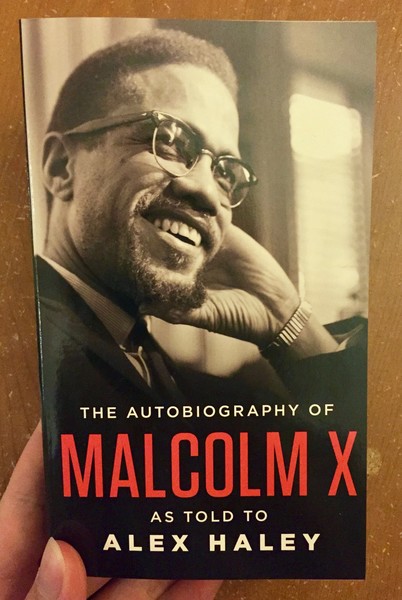
It is an engaging and highly readable book. It gives you a lot of incidental information along the way. The narrative of a tumultuous life, with a compelling rhythm, told by a restless revolutionary who was also a gentleman. The honesty and directness of the speaker are clearly visible. (I realized this after comparing it with the early sections of Gandhi’s autobiography. To me, Gandhi’s writing feels affected and artificial. Of course, the nature of the work is not irrelevant—Gandhi wrote for a newspaper column, and in India, writing an autobiography was somewhat taboo at the time—as he himself explicitly states—so he engages in a great deal of analysis and seems to constantly be defending himself. But Malcolm is not like that; he says everything with clarity, transparency, and without embarrassment.) Various parts of the story moved me. I have forgotten them and unfortunately did not take notes. Perhaps most of all, the part where he said that during a speech at a university—Harvard, maybe—he looked out the window and made a pact with God never to forget that Islam is the wax that had kept his wings together for flight, and that if he became arrogant, like in the myth of Icarus, that wax would melt and he would fall. There was another impactful scene, where he spun a pistol in his hand and pulled the trigger against his own head—to prove his courage and fearlessness of death to his associates in that gang. It was very powerful, until later in the book, in the section written from Alex Haley’s perspective, it turned out he had tricked them, hiding the bullet in his palm or something like that.
He was a Muslim, but his access to the rituals and orthodox Islam, as he put it, was limited. May God forgive him.
Aban 1401 (November 2022)






Thanks for the reviews. I really enjoy them. Looking forward for more.