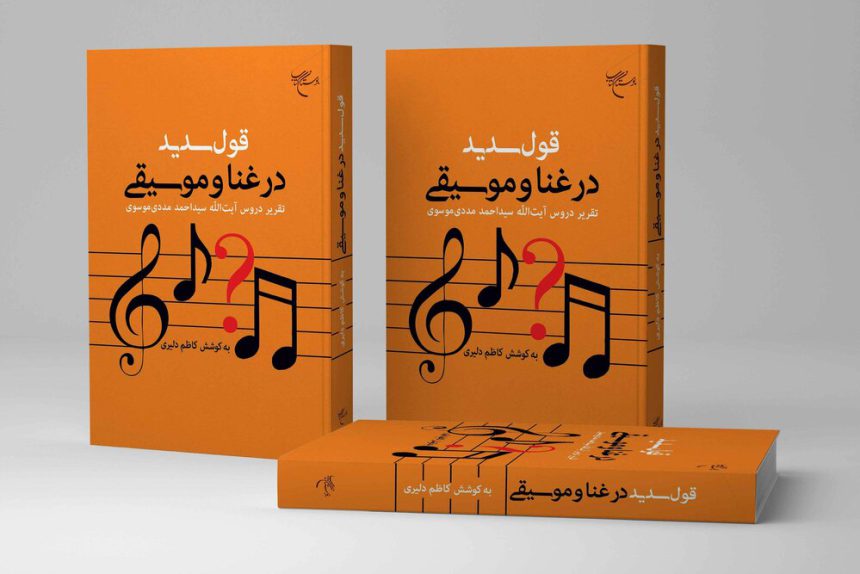
A new book entitled Qawl Sadīd on Unlawful Singing and Music has been published by Bustan‑e Ketab Institute of the Islamic Propagation Office of the Seminary of Qom. This 496‑page Persian work presents the jurisprudential lectures of Ayatollah Seyyed Ahmad Madadi Mousavi.
Adopting a jurisprudential and analytical approach, the book examines issues such as unlawful singing (ghināʾ), the sale of female singers’ services (bayʿ al‑mughanniya), vain amusement (lahw), and musical instruments. Drawing upon Qurʾānic verses, narrations from the Ahl al‑Bayt (peace be upon them), and the views of both Shiʿi and Sunni jurists, it offers a comparative analysis of the arguments for prohibition and permissibility of music. The work is structured around specific legal problems, offering both theoretical and applied perspectives.
The book is organized into five sections and twenty‑two chapters:
- Section I: The concept and jurisprudential ruling of ghināʾ.
- Section II: The sale and income of female singers, with jurisprudential analysis of related narrations.
- Section III: Musical instruments and the jurisprudential rulings concerning their purchase, sale, or possession.
- Section IV: Lahw and dance.
- Section V: “Observations in Biographical, Bibliographical, and Ḥadīth Studies,” analyzing relevant ḥadīth sources.
By compiling jurisprudential discussions and offering comparative analyses, this work provides a comprehensive picture of diverse perspectives on music and related issues, serving as a foundation for further research in the field of the jurisprudence of art and music studies.