Tag: Islamic Jurisprudence

RISE Articles 16
Intellectual Property in Islamic Jurisprudence

Examining the Status of Intellectual Property in Jurisprudence of Transactions: The Book “Oral Lectures on Intellectual Property” is Published

Volumes one and two of the book Oral Lectures on Intellectual Property, the outcome of the advanced contemporary jurisprudence lectures of Ayatollah Mohammad Mohammadi Qaeni, have been compiled and published by the Imam Reza (AS) Seminary Complex. Employing an approach based on independent legal reasoning (Ijtihad), this work addresses one of the most significant emerging […]

Swap Contracts in Islamic Jurisprudence and Economics

A Jurisprudential-Economic Review of Swap Contracts

The book A Jurisprudential-Economic Review of Swap Contracts, authored in Persian by Gholamali Masouminia, has been published by the Research Institute for Islamic Culture and Thought, comprising 588 pages. This work examines one of the prevalent instruments of financial engineering, namely swap contracts, contracts that are widely utilized in global markets in forms such as […]

Jurisprudence of Foreign Policy Series

Publication of the 15-Volume Series Jurisprudence of Foreign Policy: A Step Forward in the Development of Interdisciplinary Literature on Jurisprudence and International Relations

The Secretariat of the First International Conference on the Jurisprudence of Foreign Policy has released the proceedings of this scholarly event, aiming to elucidate the theoretical and applied dimensions of this field. This comprehensive collection, which is the culmination of compiling, evaluating, and peer-reviewing specialized research, seeks to articulate the intersection of jurisprudential foundations and […]

New Book on Islamic Jurisprudence and International Organizations

The Book “International Organizations from the Perspective of Islamic Jurisprudence: With an Emphasis on Islamic Legal Maxims” Has Been Published

Understanding the relationship between Islamic Jurisprudence and International Organizations is vital for the active and intelligent participation of Islamic countries in global affairs. Addressing this crucial dynamic, the Persian-language book, “International Organizations from the Perspective of Islamic Jurisprudence: With an Emphasis on Islamic Legal Maxims (al-qawāʿid al-fiqhiyya)”, authored by Ruhollah Shariati, offers a comprehensive framework. […]

Book cover of “Instances of Diya Payment by the State” by Hosseinali Bay

New Book Examines Diya Payment by the State in Islamic Jurisprudence

The book “Instances of Diya Payment by the State,” authored in Persian by Hosseinali Bay, has been published by the Research Institute for Islamic Culture and Thought Press in 420 pages. This research work provides an analytical examination of a pivotal issue in criminal and public law: the state’s obligation to compensate for the bodily […]

RISE Journal Pilot Issue 2

RISE Journal Pilot Issue 2 (Winter 2026) – Complete Overview

Issue Overview Page RISE: Second Pilot Issue 📄 View PDF Issue   RISE Journal Pilot Issue 2 – INTRODUCTION: A Century of Intellectual Transformation Welcome to the landmark RISE Journal Pilot Issue 2 (Winter 2026), a comprehensive exploration of the Qom Seminary’s centennial journey and its profound impact on contemporary Islamic thought. This issue serves […]

Civilizational Jurisprudence: Addressing Society’s Needs

An Introduction to the Structure of Civilizational Jurisprudence: Addressing the Needs of Society

An Introduction to the Structure of Civilizational Jurisprudence, authored by Abdolhamid Vaseti, is the latest work released by the publishing house of the Institute for Strategic Studies of Islam. Adopting an analytical and methodical approach, this work seeks to elucidate the theoretical frameworks of Islamic jurisprudence in addressing contemporary issues. It endeavors to conceptualize the […]

Women’s independence in marriage

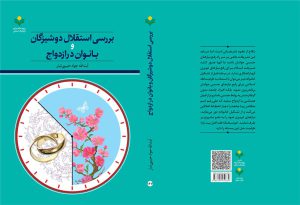
New Book: Women’s Independence in Marriage According to Islamic Law

The book An Examination of the Independence of Virgins and Women in Marriage written in Persian by Dr. Javad Habibi-Tabar has been published in 378 pages by the Research Institute of Fiqh and Law and the Publications Department of the Islamic Sciences and Culture Academy. The work focuses on a jurisprudential–legal analysis of the concept […]

Women’s Rights in Marriage

Women’s Rights in Marriage: Bridging Islamic Law and Social History

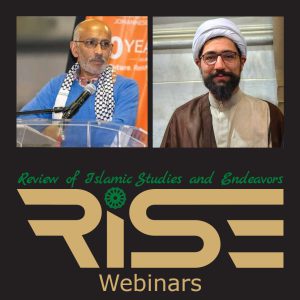
In this episode, we are joined by Dr. Muhammad Shahid Mathee, a senior lecturer in Islamic Studies at the University of Johannesburg, for a profound exploration of women’s rights within the framework of Islamic jurisprudence and social history. Dr. Mathee offers a critical alternative to the hegemonic Western discourse that often seeks to “liberate” Muslim […]

unlawful singing and music in Islamic jurisprudence

Unlawful Singing and Music in Islamic Jurisprudence: Qawl Sadīd

A new book entitled Qawl Sadīd on Unlawful Singing and Music has been published by Bustan‑e Ketab Institute of the Islamic Propagation Office of the Seminary of Qom. This 496‑page Persian work presents the jurisprudential lectures of Ayatollah Seyyed Ahmad Madadi Mousavi. Adopting a jurisprudential and analytical approach, the book examines issues such as unlawful […]

Centennial Re-establishment Conference and the new intellectual and scientific developments in the Qom Seminary

New Intellectual Reflections and Scientific Developments in the Qom Seminary: A Review of the Centennial Re-establishment Conference

Introduction: A Step Toward a New Paradigm The Qom Seminary is one of the two major centers of Shīʿī scholarship. Although its roots go back to the early centuries of Islam, the seminary was re-established and revitalized in 1922 by Ayatollah ʿAbd al-Karīm Ḥāʾirī Yazdī. Throughout the 14th century SH, with the leadership of Ayatollah […]

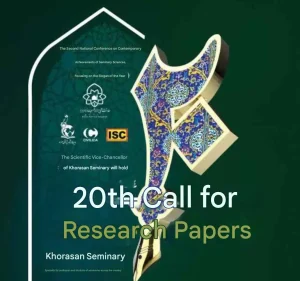
20th Call for Research Works of the Seminary of Khorasan & 2nd National Conference on Contemporary Achievements in Seminary Sciences (Mashhad)

20th Call for Research Works of the Seminary of Khorasan & 2nd National Conference on Contemporary Achievements in Seminary Sciences (Mashhad)

The second ceremony for selecting the “Seminary Researcher of the Year” (Seminary of Khorasan), together with the Seminary’s “Researchers’ Assembly,” will be held on Wednesday, January 1, 2026, organized by the Scientific Deputy of the Seminary of Khorasan at the Suleimanieh Seminary School in Mashhad.   The 20th Call for Research Works of the Seminary […]

Scholaria Contributions 7

Jurisprudence Without Progress Is Not Jurisprudence

This article explores the profound and inseparable relationship between Islamic jurisprudence (fiqh) and societal development. The author argues that the traditional authoritative sources of Islamic law—the Qur’an, Sunnah, reason, and consensus—possess the complete epistemic capacity required to formulate a comprehensive “Progress Model.” By integrating the higher objectives of Islamic law (maqāṣid al-sharī‘a) with societal administration, the text demonstrates that authentic progress must be rooted in jurisprudential foundations, and conversely, dynamic jurisprudence is inherently progressive.

The Establishment of Government Is Self-Evident in the Sharia

This text explores the comprehensive and eternal nature of Islamic guidance, emphasizing the necessity of discerning divine rulings for newly emerging issues in human life. It highlights the pivotal role of Islamic seminaries (ḥawzas) and the prerequisite of deep jurisprudential mastery. Ultimately, it asserts that the codification of divine laws necessitates an enforcing authority, making the establishment of government a self-evident truth within the Sharia.

The Requisites of Research in the Field of the Jurisprudence of Art

This text outlines the foundational and methodological prerequisites for researching the jurisprudence of art. It defines the jurist’s true mission as discovering the Sharia, addresses the extremes of “subject identification” (mawḍūʿ-shenāsī), and distinguishes it from “instance identification.” Ultimately, it explores the societal realization of Islamic art jurisprudence through the philosophical principle of the agency of the agent and the receptivity of the recipient.