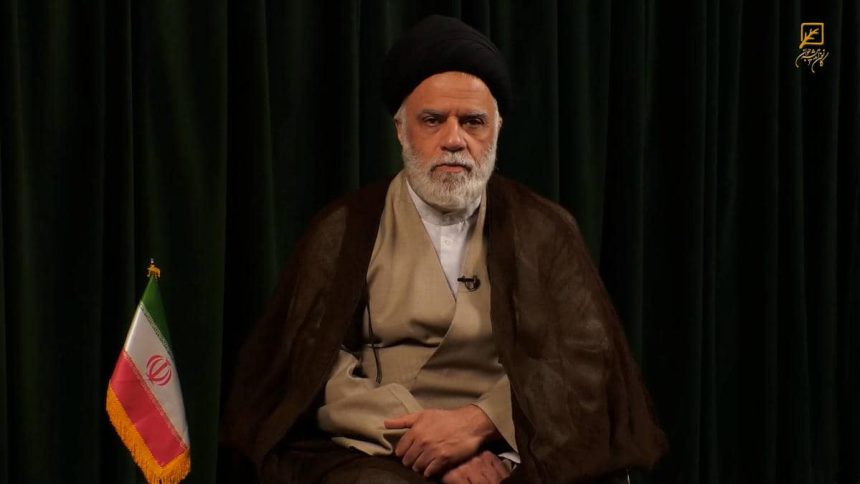
Interview with Hujjat al-Islam wa al-Muslimin Sayyid Mohammad Kazim Tabatabaʾi
Date of Interview: November 1, 2025
A Leading Figure in Contemporary Hadith Studies
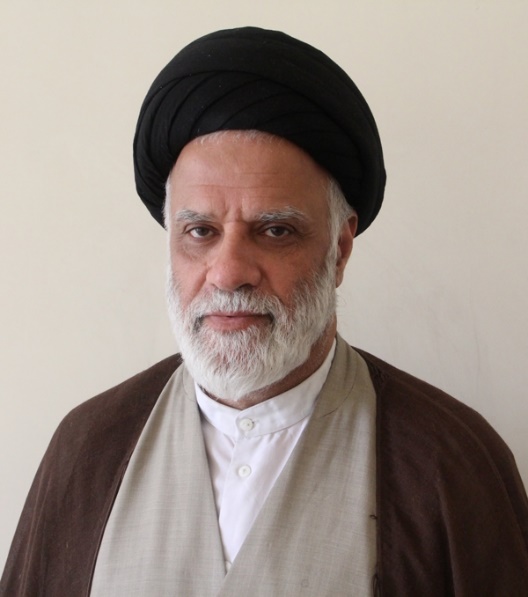
Hujjat al-Islam Dr. Sayyid Mohammad Kazim Tabatabaʾi (born 1344 SH/1965 CE) is one of the prominent scholars and researchers of the Qom Seminary (Ḥawza) in the field of ʿulūm al-ḥadīth (hadith studies). For many years, he served as the director of the Research Institute for Hadith Sciences and Teachings at the Dār al-Ḥadīth Institute in Qom, and he is regarded as a leading figure in methodological and research-based hadith studies.
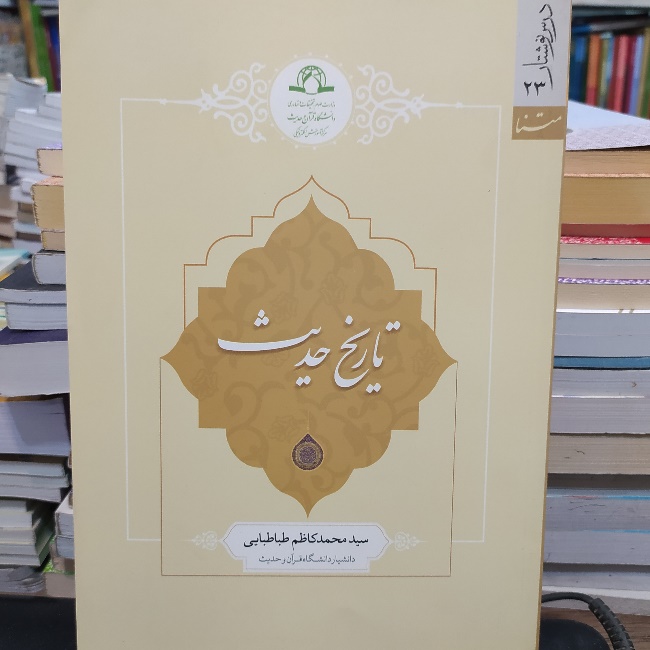
His works in the areas of hadith history and the methodology of hadith understanding—most notably his two major contributions, Tārīkh-i Ḥadīth-i Shīʿa (History of Shīʿī Hadith) and Manṭiq-i Fahm-i Ḥadīth (Logic of Hadith Interpretation)—are widely used in academic and scholarly centers. With an analytical and comparative approach, Dr. Tabatabaʾi seeks to build a connection between the classical hadith heritage and contemporary scholarly methods. Within Iran’s academic landscape, he is recognized as one of the influential specialists in hadith studies.
The Transformation of Hadith Studies in the Qom Seminary
RISE:
We extend our greetings and respect to the esteemed scholar and prominent hadith researcher, Dr. Sayyid Kazim Tabatabaʾi. We sincerely appreciate your willingness to devote your valuable time to this conversation. Your presence offers an excellent opportunity for us to benefit from your precise perspectives in the field of hadith studies. The following questions are intended to help us gain a clearer understanding of the landscape of hadith scholarship in the contemporary Ḥawza of Qom. In your view, how has the Qom Seminary transformed hadith studies over the past century, and what must it do to remain at the forefront?
Answer:
 Greetings to you as well. I am honored by your kind words and very pleased to participate in this conversation. I hope our discussion will contribute to a better understanding of the rich heritage of hadith studies. Over the past century, the Ḥawza of Qom has made more substantial progress in hadith studies than in any other traditional discipline—whether Qurʾanic studies, jurisprudence (fiqh), principles of jurisprudence (uṣūl al-fiqh), philosophy, theology, or ethics. When we compare the state of hadith scholarship in 1300 SH/1921 CE with the present, the transformation is remarkable. In 1300 SH, hadith work was largely limited to transmission, basic rijāl-based verification, and restricted commentary on the Kutub Arbaʿa of the Shīʿī tradition—al-Kāfī, al-Tahdhīb, al-Istibṣār, and Man lā Yaḥḍuruhu al-Faqīh. Today, by contrast, we witness critical editions, digital databases, interdisciplinary engagement, and global dissemination—developments rooted in the scholarly activities of the Qom Seminary.
The Four Pillars of Future Scholarship
Sustaining this growth, however, requires continual reassessment of needs, foundations, methodologies, and the introduction of exemplary research. The future rests upon four essential pillars, each requiring targeted scholarship, training, and investment.
1. Hadith Foundations
A diverse audience—from specialists to the general public—requires well-structured and up-to-date scholarly resources that articulate the foundations of Shīʿī thought within modern hadith studies in contemporary terms. The danger of “instant information” is real. It is therefore essential to prioritize the place of the Sunna[1] within the architecture of religious knowledge, the relationship between the Qurʾān and hadith, the interaction between hadith and its cultural milieu, the challenge of the historicity of hadith, the engagement of hadith with other epistemic sources, and the rationale and methodology of interdisciplinary hadith studies.
2. Broad Comparative and Historical Analysis
To establish a comprehensive and scientific system for assessing the authenticity of Imāmī hadiths, it is necessary to move beyond narrow approaches and adopt a broad comparative and historical analyses. This requires a systematic examination of the interactions between the Imāmī hadith tradition and various intellectual and religious heritages. This research program should proceed on multiple levels:
- First, within the intra-Shīʿī sphere, by examining the relationships and mutual influences between Imāmī hadith and other Shīʿī groups such as the Ismāʿīliyya, Zaydiyya, Wāqifa, and the Ghulāt.[2]
- Second, within the broader Islamic world, where one must analyze interactions with Sunnī schools as well as intellectual currents such as Sufism, Islamic mysticism, and Islamic philosophy.
- Third, from a cross-religious (interfaith) perspective, through comparative studies with other religious traditions, including Judaism, Christianity, Zoroastrianism, and Manichaeism.
- And finally, at the cultural-civilizational level, by tracing shared elements and influences linking Imāmī hadith to older cultural spheres such as the Arab, Persian, Greek, Egyptian, Indian, and Chinese civilizations.
Such an interdisciplinary approach will enable a precise and systematic understanding of networks of knowledge transmission, conceptual convergences, and processes of influence, thereby providing more rigorous scholarly tools for the critical evaluation of the hadith corpus.
3. Hadith Authentication
Confidence in the transmission of hadith from the Sunna requires a scientific, logical, and effective methodology. Not everything labeled as hadith can be accepted, nor can the difficulties of verification justify abandoning the Sunna. Methods of hadith evaluation have evolved across several periods:
- An early phase marked by reliance on manuscripts and fihrist-based transmission,
- a middle phase characterized by isnād[3]-centrism and the growth of rijāl studies,
- and a later phase focused on wuthūq ṣudūrī[4] (confidence in issuance) by synthesizing multiple indicators.
Of course, the Akhbārī school maintained that all reports in the Kutub al-Arbaʿa were definitive.
Despite these developments, there remains an ongoing need for research on theoretical foundations, historical development, methodological challenges, and new analytical tools required for contemporary hadith studies—especially in rijāl studies, whether in their classical or modern forms.
4. Hadith Dossiers
Every hadith —long or short, strong or weak—deserves a complete scholarly dossier. This both preserves the hadith heritage and allows for the differentiation of sound from unsound material, while countering non-scholarly claims. Such a dossier includes:
- textual genealogy (primary and parallel sources),
- the Infallible person from whom the hadith is reported,
- the earliest transmitter,
- variant manuscripts,
- minor textual variants,
- differences in transmission,
- textual damage (such as omission, misreading, and interpolation),
- circumstances of issuance (sabab al-ṣudūr),
- Qurʾanic and hadith corroborations,
- isnād evaluation and issuance authentication,
- conflicting, parallel, and explanatory reports,
- historical contextualization,
- and the reception history of the report.
For the Qom Seminary to remain a leader, it must institutionalize these four pillars not as isolated efforts but as a unified, integrated ecosystem. If this is achieved, the coming century will belong to Qom—just as the previous one did.
Revitalizing Classical Texts in Modern Hadith Studies
RISE:
How can the classical hadith books be revitalized?
Answer:
The revival of the Shīʿī written heritage is no longer an individual endeavor tied to a few rare manuscripts; rather, it is a civilizational, scholarly, and multi-layered project that must be designed and executed as a complete ecosystem. This ecosystem consists of four interconnected components: manuscript discovery, critical editing, academic institutionalization, and the transformation of the hadith heritage into contemporary knowledge.
A Four-Component Ecosystem for Heritage Revival
The first component concerns the discovery and accessibility of manuscripts. In recent years, a growing number of early hadith manuscripts have been recovered from private libraries, mosques, seminaries across the world and even Western archives. Some of these manuscripts contain versions different from the commonly circulated texts or include significant variants. Therefore, bibliographic knowledge and digital manuscript reading must become foundational skills for every hadith researcher. We need a comprehensive hadith manuscript database that records all known manuscripts alongside precise information regarding their location, date of composition, script features, and textual damage.
The second component is the critical edition of hadith books and manuscripts. Individual editorial efforts are no longer sufficient. Even the best earlier editions—despite their historical value—are now inadequate, as new manuscripts continue to surface and modern digital tools have raised global standards of textual criticism. Thus, editing hadith manuscripts must be a team-based enterprise composed of a codicologist, a rijāl specialist, a textual analyst, an expert in classical Arabic, and a digital editor. Such a team not only produces a critical edition but also documents all manuscript variants, minor differences, and possible textual damage such as omission, misreading, and interpolation.
The third component is the academic institutionalization of the science of text editing. Despite the monumental achievements of earlier and contemporary editors—whose work was grounded in personal dedication and the mentorship of Ḥawza and university scholars—this science has not yet been systematized. We therefore need to establish “Research and Revival of Ḥadīth Texts” as an institutionalized branch of hadith studies within both the seminary and the university. This field should include workshop-based courses, practical manuscript training, instruction in digital editing software, and familiarity with international scholarly standards. Without such institutionalization, future generations of editors will lack the necessary competencies.
The fourth and final component is the transformation of revived heritage into contemporary knowledge. In hadith encyclopedias, the audience seeks the distilled essence of research, not merely raw texts. Encyclopedic writing, widely accepted in our time, can fulfill this need. In recent years, works such as Mīzān al-Ḥikma, al-Ḥayāt, and Dānishnāmih-yi Qurʾān va Ḥadīth (the Encyclopedia of the Qurʾān and Hadith) have had considerable success; however, we still lack thematic and interdisciplinary hadith encyclopedias.
We must compile encyclopedias that examine hadith from theological, ethical, educational, social, economic, political, devotional, and hadith-science perspectives. Such encyclopedias may be text-centered—like the Encyclopedia of the Qurʾān and Hadith, which presents complete reports with isnād and translation—or analysis-centered, like research encyclopedias that provide interpretations, conclusions, and applications. Both types are essential and mutually complementary.
Ultimately, true revival occurs when an ancient manuscript—say, from a library in Istanbul—after undergoing discovery, collaborative editing, digital documentation, and academic processing, becomes an entry in a specialized encyclopedia accessible to a student in Indonesia. This fourfold chain—discovery, critical editing, academic training, and encyclopedic production—must be transformed in the Qom Seminary into a continuous, sustainable, and measurable scholarly production line. Only then will the Shīʿī hadith heritage rise from a dormant treasure to a living, dynamic, and global body of knowledge.
Making Hadith Studies Practical: From Specialized Field to Daily Life
RISE:
What is the mission of the Qom Seminary in transforming hadith understanding from a specialized field into a public, living, and practical form of knowledge within the three domains of scholarship, history, and daily life?
Answer:
The purpose of the teachings of the Ahl al-Bayt (a) is to guide and elevate people. This aim is realized only through a correct, deep, and practical understanding of hadith. Their repeated emphasis on the incomparable superiority of deep comprehension over the mere transmission of hadith is precisely directed toward this point. Thus, fiqh al-ḥadīth[5] is not a secondary discipline; it is the central field within hadith sciences and the primary responsibility of the hadith researcher. Transmitting hadith without understanding it is like a lamp without light; sound comprehension transforms a report into guidance and a practical model.
This deep understanding must be cultivated across three major dimensions: daily life, history and sīra,[6] and interdisciplinary engagement.
Three Dimensions of Deep Comprehension (Fiqh al-Hadith)
First, in the realm of daily life, fiqh al-ḥadīth must institutionalize principles and methods of textual understanding. We need profound analytical lexicography that investigates the etymological roots, historical contexts, and implicit connotations of each term. We must also analyze the methods of hadith interpretation employed by earlier scholars—from Shaykh Ṣadūq to ʿAllāma Majlisī—to identify successful models and weaknesses. Intellectual challenges related to textual interpretation, especially in the age of instant information, must be addressed with up-to-date and compelling reasoning. Finally, exemplary commentaries on hadith—particularly in non-legal fields such as ethics, education, politics, and economics—must be produced. These commentaries should be both scholarly and accessible, practical, and responsive to the needs of younger generations.
Second, in the historical and sīra dimension, the history of the Ahl al-Bayt (a) consists of reports about their lives and is therefore a subset of hadith; thus, hadith criteria apply, and purely historical criteria cannot be used in isolation. The sīra of the Ahl al-Bayt (a), as models and exemplars, requires specialized research grounded in its own foundations and methodologies. A distinction must be made between contextual sīra—shaped by the cultural conditions of the time—and normative sīra, which articulates universal principles. Research in this domain must encompass theoretical foundations of the history of the Ahl al-Bayt (a), principles and methods of analytical history, evaluation of historical reports using hadith methodology, methods of applying the sīra, analytical-critical sīra studies, compiling the sīra of the Imāms (a) based on hadith and historical sources, encyclopedias on the Prophet (s) and the Ahl al-Bayt (a), methodologies of prominent Imāmī sīra scholars, and the contextualization of sīra. This contextualization must involve extracting general principles and applying them to contemporary life—not superficial parallels that lead to distortion.
Third, in the scientific and interdisciplinary dimension, the Qurʾān and hadith represent foundational sources of religious knowledge and can productively interact with other fields—especially the human and empirical sciences—to enrich religiously grounded scholarship. Interdisciplinary studies connecting the Qurʾān and hadith with medicine, psychology, astronomy, sociology, and more require carefully designed methodologies. We must produce effective research grounded in these sources and examine the relationship between hadith and other sciences in a balanced manner—avoiding both the absolutization of religious knowledge and claims of complete scientific independence from religion. Rigorous case studies—such as the application of hadith in medicine or psychiatry—are essential to elevate the role of religious knowledge within the human sciences.
Ultimately, the Qom Seminary must construct an integrated, multi-layered understanding system consisting of:
- accessible commentaries for the general public,
- analytical sīra studies for intellectuals, and
- interdisciplinary methodologies for academics.
This system must be implemented across schools, seminaries, universities, media, and even mobile applications so that hadith is not merely transmitted but becomes a living, dynamic, guiding, and transformative force in individual and social life. Only then will the Sunna of the Ahl al-Bayt (a) fulfill its central mission: guidance and elevation.
Addressing Difficult Narrations in Contemporary Hadith Studies
RISE:
How can the Ḥawza of Qom respond to today’s difficult questions regarding complicated or controversial narrations?
Answer:
Difficult narrations have always drawn the attention of scholars and specialists in hadith studies—whether due to unfamiliar or complex wording whose meaning lies beyond the reach of ordinary audiences, or because they appear to diverge from our firmly established doctrines. In recent years, valuable studies have been produced with an approach rooted in mushkil al-ḥadīth (traditions with semantic or textual difficulty), and this field has attained notable breadth. Yet a considerable number of difficult narrations still require fresh scholarly investigation.
Today’s cultural interchanges have brought forth new and more universal examples of difficult hadiths, whether for specialized audiences or the broader public. Some narrations that appeared acceptable in earlier periods now seem problematic in modern contexts. Convincing the contemporary audience about such narrations has become more challenging and requires rigorous, up-to-date, and well-reasoned explanations.
These challenges manifest across several domains: variations among ethnic groups and social strata; narrations concerning particular groups—especially those related to gender (women) and regions; issues of cosmology and nature within the creative realm, and narrations that conflict with the cultural norms of the modern era.
On the other hand, the expansion of communication media, the digital sphere, and social networks—alongside the rise of a questioning spirit and rapid cultural exchange—has produced both positive and negative consequences. While these developments have broadened the dissemination of the Qurʾān, hadith, and the heritage of the Ahl al-Bayt (a), they have also increased hadith-related doubts, particularly among the general audience. Many individuals encounter texts that were once accessible only to specialists, and without the required scholarly prerequisites, they may fall into jahl murakkab (compound ignorance), believing they understand what they do not.
Furthermore, the incursion of adversaries of transmitted Islamic teachings into hadith texts and public belief, the circulation of weak narrations—often sourced from obscure works—in public gatherings and sermons, and the widespread distribution of such content through audio and video online, have all contributed to the proliferation of doubts.
The research method of analytical history has highlighted the need to investigate the hidden dimensions of hadith heritage and hadith sciences. New sources, modern tools, updated research methodologies, the ability to publish quickly and assess scholarly feedback, increased familiarity with trans-regional studies, and the emergence of hadith ecology studies have all created opportunities for deeper inquiry into hadith history and associated sciences. Contemporary research warrants greater attention to the “applied histories” of hadith sciences—such as the history of rijāl studies, dirāya, and fiqh al-ḥadīth; analytical histories of Shīʿī hadith; historical analyses of hadith schools; ecological studies of hadith; and analytical-critical bibliographies of hadith sources across different sects.
Comparative studies between Shīʿī and Sunnī hadith—in fields such as hadith history, hadith sources, key thematic issues, and the intellectual trajectories of transmitters and hadith scholars—allow for a systematic evaluation of shared foundations and points of divergence among Islamic schools. This method can likewise be applied to the transmitted heritage of other religions.
To face these challenges, the Ḥawza of Qom must track textual and contextual doubts, classify them, provide public responses suited to the nature of digital media, offer specialized academic answers, articulate authoritative positions regarding weak narrations, and collect, assess, and analyze critiques related to Shīʿī hadith. These efforts must operate through a coordinated, multi-layered system that can both satisfy the general public and equip specialized researchers. Only then will the Shīʿī hadith heritage remain steadfast amid the current wave of challenges and uncertainties.
Taking Qom’s Hadith Studies to the Global Stage
RISE:
What is the first concrete step that the Ḥawza of Qom must take to share its hadith scholarship with the world?
Answer:
Hadith scholarship within the Ḥawza of Qom has experienced remarkable growth since the Islamic Revolution of Iran—from critical editions and digital databases to interdisciplinary research and responses to contemporary doubts. Yet this vast body of scholarship remains largely confined within the Persian language. Only a limited portion has been translated into Arabic or other languages. As a result, non-Persian-speaking researchers—whether in the Islamic world or in Western academic centers—are either unaware of these achievements or know them only through inadequate intermediaries. This linguistic isolation not only restricts scholarly opportunities but also enables inaccurate or biased portrayals of Shīʿī hadith heritage to dominate global discourse.
Overcoming Linguistic Isolation and Orientalist Paradigms
Over the past two centuries, Orientalist studies of Islamic heritage have expanded significantly. While a few such works deserve appreciation and have even shaped new directions in global hadith studies, the majority have aimed to undermine Islamic transmitted heritage—through distortion, selective citation, or disregard for historical and epistemic context. Before the Islamic Revolution, this focus was largely on Sunnī hadith; afterward, with the introduction of a dynamic Shīʿī intellectual identity to the world, a new wave of Western studies emerged concerning Shīʿī transmitted heritage. Some were openly hostile and polemical, others motivated by scholarly curiosity yet lacking in deep familiarity with Shīʿī foundations.
In recent years, a new phenomenon has appeared: researchers born in Islamic countries who possess little genuine attachment to Islamic or Shīʿī heritage and who model their approach to Shīʿī hadith after Western academic frameworks. With access to primary sources and linguistic competence, their critiques can be even more penetrating. Thus, engaging with Orientalist research—by clarifying, distinguishing, and responding academically—is not optional; it is a civilizational obligation.
This task requires first distinguishing genuine academic inquiry from destructive material—by analyzing methodologies, examining presuppositions, and evaluating arguments. Then, identified critiques must be systematically collected and addressed not emotionally, but through peer-reviewed articles, scholarly monographs, and specialized conferences. Understanding Western academic paradigms—from methodological frameworks to philosophical assumptions—is essential for producing effective responses.
Ultimately, training multilingual researchers is crucial: scholars proficient simultaneously in Shīʿī hadith sciences and major scholarly languages (English, French, German, and Arabic). Such individuals can serve as intellectual bridges, engaging directly with Orientalists and global academic centers and addressing critiques in their own languages and discourse.
However, true globalization requires more than defense—it demands intellectual initiative and proactive dissemination. This begins with systematic, targeted, and professional translation.
Establishing a Specialized Translation Center
The first and immediate step is the production of high-quality, standardized abstracts of Qom’s major hadith studies in widely used languages. Priority languages include Arabic, English, and French, which collectively cover the largest number of researchers, students, and academic institutions—Arabic for the Islamic world, English for global scholarship, and French for Africa and parts of Europe. A second tier includes Urdu, Turkish, Russian, Spanish, German, Malay, Chinese, and Hindi, enabling full geographic and demographic coverage.
These abstracts must be concise yet precise, source-referenced, and indexed on global academic platforms. Their publication in an open-access digital portal is essential, allowing scholars worldwide to access, download, and cite them.
A practical and achievable first step—implementable within a single year—is the establishment of a specialized and professional translation center within the Ḥawza of Qom. This center should:
- Identify at least 500 leading hadith studies annually;
- Produce standardized abstracts in the three primary languages;
- Provide accurate, peer-reviewed translations;
- Upload them to global platforms such as JSTOR, Academia.edu, as well as a dedicated portal.
Such a center should work collaboratively with existing hadith institutes. Without this step, the achievements of the Ḥawza will remain confined within a linguistic enclave, leaving the world to accept non-Shīʿī narratives of Shīʿī hadith. With this step, the Qom Seminary will transform from a local center into a global hub of hadith studies and scholarship—one that not only responds but intellectually leads.
RISE:
Esteemed professor, once again we sincerely thank you for your precise and scholarly answers and for the generous time you dedicated to us. We ask God the Almighty to grant you health and increasing success in serving the teachings of the Ahl al-Bayt (a).
Answer:
Thank you very much for your kind words. I appreciate your thoughtful questions and the opportunity to contribute to this discussion. May God grant you success in your scholarly endeavors.
- The practices, sayings, and approvals of the Prophet Muḥammad (s) and his Infallible Progeny (a), serving as a guiding model for belief, ethics, and law. ↑
- Ghulāt refers to extremist Shīʿī sects who exaggerated the status of the Imāms (a), attributing divinity or supernatural powers to them. ↑
- Chain of transmission. ↑
- Confidence in issuance refers to the assurance that a given hadith was indeed issued by an infallible person (maʿṣūm). This certitude may be established either through the reliability of its chain of transmission (isnād) alone or through other contextual indicators (qarāʾin), independently or in conjunction with the isnād. ↑
- Fiqh al-Ḥadīth is one of the disciplines within ʿUlūm al-Ḥadīth that explicates the principles and criteria for understanding and interpreting hadith texts. ↑
- The recorded practices of the Prophet Muḥammad (s) and his Infallible Progeny (a). ↑