
Introduction
This essay examines the meaning, necessity, and methodological foundations of Islamic human sciences as articulated in the thought of Āyatullāh Dr. ʿAlī-Akbar Rashād. It argues that the human sciences are not merely descriptive disciplines but also contain normative and prescriptive dimensions that shape individual conduct, social organization, and civilizational direction. From this perspective, producing Islamic human sciences requires more than adapting existing theories to local culture; it calls for a systematic reconstruction of knowledge on the basis of Islamic foundations, sources, and valid logic.
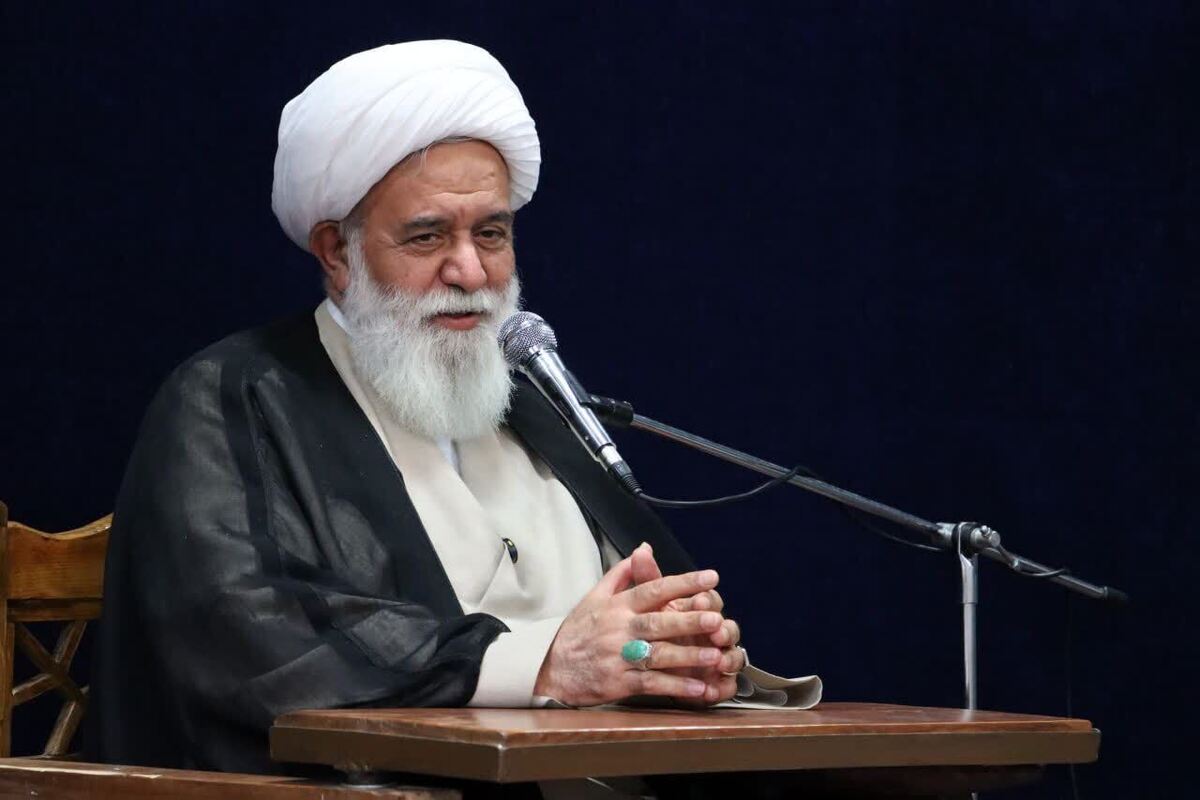
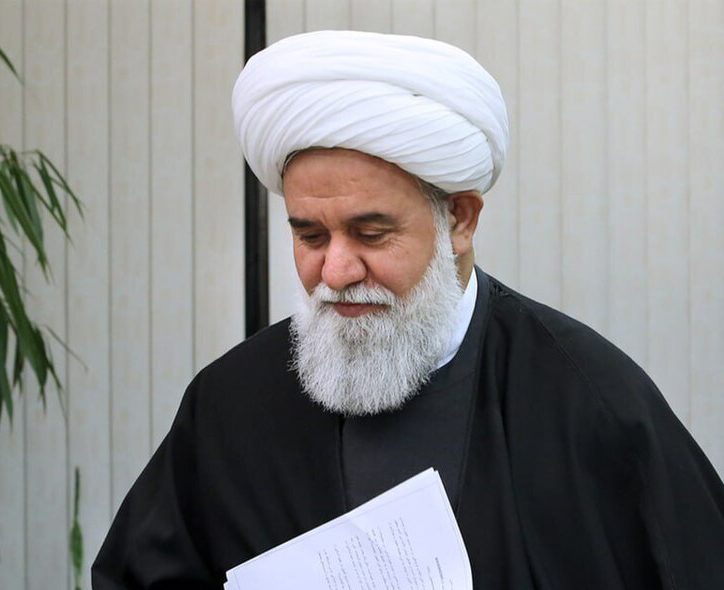
Āyatullāh Dr. ʿAlī-Akbar Rashād (born 1956) is among the most prominent contemporary scholars in the fields of philosophy of religion, kalām (theology), uṣūl al-fiqh (principles of jurisprudence), and theorization of religious knowledge. He is the founder of the Research Institute for Islamic Culture and Thought as well as the Imām Riḍā Seminary, and a member of the Supreme Council of the Cultural Revolution. For nine consecutive years (2015–2023) he was listed among the 500 Most Influential Muslims in the World, and throughout his scholarly career, he has received more than thirty academic awards and distinctions.
Rashād is recognized as an outstanding instructor of advanced seminary levels, and for many years, he has taught and conducted research in the domains of “philosophy of religion,” “logic of understanding religion”, “Islamic mysticism”, and “religious theorization.” His scholarly output includes over forty-five books and one hundred academic articles. His most important intellectual achievement is the theory of Ibtināʾ, a novel framework that analyzes the mechanisms by which religious knowledge is formed, through a logical, systematic, and evaluable approach. This theory is widely regarded as one of the significant contributions to the philosophy of religion in the Islamic world.
Āyatullāh Rashād may be seen as a representative of a generation of scholars who, while preserving the traditional identity of the seminary, adopt a rational, research-oriented, and problem-driven approach to religion, emphasizing the necessity of ethics, spirituality, and scholarly responsibility in the contemporary world.
1. Definition of the Human Sciences
The term “human sciences” can be employed at three levels:
- In the narrow sense:
It refers to disciplines of knowledge that study and investigate only the individual and social behaviors of the human being. - In the general sense:
A constellation of sciences that, in addition to examining human individual and collective behavior, also engage in anthropology. - In the broadest sense:
Beyond behavior and anthropology, this usage includes philosophy, the arts, and similar domains.
It must also be clarified whether we are aiming at a post factum (posterior) definition, based on the existing state and subject matter of the field, or a normative definition, based on the desired state and ideal structure of the human sciences.
Focusing on the ideal human sciences, while taking existing ones into account, I propose the following working definition of the contemporary human sciences:
“A set of disciplines containing descriptive (tawṣīfī), normative (taklīfī), and prescriptive (tajwīzī) propositions concerning the human being, their existential manifestations,[1] and their individual and collective behaviors.”
To elaborate: the human sciences constitute an ensemble of knowledge and methodologies that address the human being and their behaviors on three levels:
- Description:
They describe (report) the human being and their individual and collective behaviors as part of the fabric of reality. - Normativity:
They issue directives for these behaviors by determining what ought and ought not to be done. - Prescription:
By providing recommendations, they delineate what may or may not be appropriate.
Accordingly, the human sciences comprise three categories of propositions—descriptive, normative, and prescriptive. Depending on how a particular set of propositions concentrates on a specific sphere of human “existential manifestations” or “behavioral expressions,” a given branch of the human sciences takes shape.
For example:
- A set of propositions that describes the human relationship to “wealth”, and issues norms and prescriptions concerning how humans ought or ought not to engage with wealth, constitutes the discipline of economics.
- When propositions that describe the human relationship to “power” are combined with normative and prescriptive rules regarding appropriate conduct toward power, the discipline of political science emerges.
The same applies to other domains—such as international relations, encounters with the Other, and security—where the systematic organization of each category of propositions yields one of the sciences within the broader system of the human sciences.
In summary, the human sciences are bodies of knowledge containing categorized and differentiated propositions about the human being and their individual and collective behavior.

2. The Necessity of Producing Islamic Human Sciences
At the first step—and considering the 200-year history of modern human sciences, their place within the classification of knowledge, and their role in managing human life—we face a fundamental question: Why is there a need to develop Islamic human sciences?
The necessity of this undertaking may be explained as follows:
a. The Conflict between Existing Human Sciences and the Islamic Sharīʿa
From our perspective, the human sciences are, in effect, rivals to the Sharīʿa. In fact, the concept of science and religion in the Western world differs from that in the East and the Islamic world, especially in Iran. In the Western world, the conflict appears as one between the science and Christian theology. However, in the Islamic world, the challenge is of a different kind, because Islamic theology is compatible with science—even though scientific propositions may at times appear to conflict with religious or epistemic propositions. Such conflicts are merely prima facie tensions: either our understanding is flawed, or what we take to be “scientific knowledge” does not in fact meet the criteria of science. When we encounter such propositions, this should not be taken as a genuine religious conflict.
In the Islamic world, the real tension lies between the existing human sciences and the Sharīʿa, because everything that the Sharīʿa claims jurisdiction over is likewise claimed by the human sciences.
The Sharīʿa maintains that it is capable of explaining, regulating, and governing all affairs of human life—including economics, culture, and other social institutions. These domains require interpretation and the issuing of normative rulings, which constitute the very subject matter of the human sciences.
Key questions arise concerning the nature, scope, and authority of the Sharīʿa’s managerial resources—questions whose answers generate “ought” and “ought-not” rulings for organizing behavior. Islam, by asserting the expansiveness of its scope, claims the ability to govern all arenas, including economics through an Islamic economic understanding.
Yet the human sciences make the exact same claim, positioning themselves as the proper managers of these very domains.
b. The Philosophical Claims of the Human Sciences
Some mistakenly assume that the human sciences merely issue concrete rulings. However, they encompass three types of propositions:
- Ontological Propositions (analyzing “what is and is not”).
- Anthropological Propositions (analyzing the human being and their actions and reactions).
- Epistemological Discussions (explaining the foundations and conditions of knowledge production).
Today, certain philosophical debates—such as the sociology of knowledge—which analyze the existential conditions of knowledge and its rules of formation, have become central themes within the human sciences.
Thus, the human sciences are not only philosophically assertive but also prescribe oughts and ought-nots for human development and progress.
The key point is that religion and Sharīʿa likewise possess propositions in all three domains—ontology, anthropology, and normative guidance. The practical outcome in the contemporary world, including Iran, is that the existing human sciences have effectively taken over the management of human affairs.
c. The Secular Foundations of Current Human Sciences
The dominant human sciences rely on their own foundations, theories, logic, and systematic frameworks. Therefore, we must produce Islamic human sciences parallel to the existing ones—even though some overlap may naturally occur, since reason is one of the sources shared by both. Whatever is the product of sound reason is also affirmed by religion.
Yet many theories within today’s mainstream human sciences rest on faulty premises and unacceptable logic, and thus cannot be adopted. Moreover, because these sciences were developed to meet the needs and aims of the Western world, they cannot necessarily address the challenges of Muslim societies. Many global crises today have arisen under the influence of flawed human-science theories. Some crises in the Islamic world—or issues that remain unresolved—stem from reliance upon secular human sciences, which are misaligned with Islamic priorities.
d. The Realization of Islamic Human Sciences as a Prerequisite for Islamic Civilizational Renewal
The realization of the “Islamic–Iranian Model of Progress”[2] is conditional upon the prior production of Islamic human sciences. In both design and implementation, the goal is for the affairs of society to be managed and advanced on the basis of Islamic foundations and in accordance with religious conditions. For this to be possible, the human sciences that govern society must first undergo Islamicization, enabling the model of progress to be formulated and subsequently implemented. Thus, the entire process fundamentally depends on the production of Islamic human sciences.
Civilizational formation follows the same rule: the design and realization of the model of progress on the basis of Islamic human sciences is itself the essence of “Islamic neo-civilizational construction”.
3. Misinterpretations of the Project of Islamic Human Sciences, and Its Proper Meaning
Many contemporary crises stem from the inadequacy or inappropriateness of mainstream human sciences. Āyatullāh Khamenei has called upon scholars—within Iran, the Islamic world, and globally—to undertake a profound transformation of the human sciences at the world scale, and to produce Islamic human sciences, in order to rescue humanity from the harms caused by the dominant epistemic model.
However, numerous misunderstandings have arisen regarding this vision. Below, I examine several of these misinterpretations.
1. The Misconception of Completely Eliminating Existing Human Sciences
Some assumed that proponents of Islamic human sciences intend to eliminate the existing human sciences altogether. This is a fundamental misunderstanding. At no point have we advocated the discontinuation or abolition of human science disciplines. In principle, no one claims that a particular science or set of sciences should be removed from the domain of knowledge or from educational institutions. Knowledge is not subject to prohibition; debates and theories remain accessible in their sources, and students continue to learn them.
Thus, the assumption of total abolition is unfounded.
2. The Reduction of the Project to “Indigenizing the Human Sciences”
Others interpreted the transformation of human sciences as indigenization and reduced the deeper aspiration of producing religious human sciences to merely adapting the sciences to local conditions. The term “indigenization” itself has been understood in several distinct ways:
- Applied indigenization
- Cultural indigenization
- Agent-based indigenization
- Theoretical indigenization
Some of these overlap. By applied indigenization we mean that research in the field of the human sciences should seek solutions to the problems specific to Iran, and should aim at devising remedies for the particular issues of this land. In other words, at the level of application, our concern must be addressing the challenges faced by our own country. Scholars in the human sciences ought to employ the foundations and theories of the prevailing human sciences in order to generate solutions for national problems and locally relevant issues, or to produce knowledge within this domain that is responsive to indigenous and national needs. Indigenization, in any of the aforementioned senses, is sound in its own right; however, it does not entail Islamization nor the production of religious human sciences
Cultural indigenization can be understood in two senses. If by cultural indigenization one means that ‘science,’ in an absolute sense, is regional, and that ‘the factor of region’ shapes the epistemic identity of the sciences—such that foundations, infrastructures, structures, and theories are all formed under the influence of cultures—then this is mistaken and untenable. On the basis of this very erroneous assumption, some have recently claimed that ‘we do not have sociology; rather, we have sociologies!’
Scientific propositions, insofar as they truly qualify as science, are truths discovered independently of local conditions and particularities, and are intrinsically revelatory of reality. Such truths cannot meaningfully be divided into ‘indigenous’ and ‘non-indigenous,’ for science is science wherever it appears, and it is impossible for a proposition to be considered ‘knowledge’ in one region and ‘ignorance’ in another. On this basis, expressions such as ‘indigenizing human sciences’ or ‘Iranian theories of human sciences,’ in this sense, lack any coherent or logical meaning.
Of course, one may assign another meaning to cultural indigenization: namely, to revise and modify existing human sciences so as to make them compatible with one’s own culture. This approach might be pursued at two levels: a superficial and relative level, or a deep and absolute one. Nonetheless, the practicality of this approach—especially at its deep and foundational level—is seriously questionable, for its genuine realization would require transformations at the level of theoretical foundations, which could lead to the emergence of entirely new schools within the human sciences. Yet it must be noted that such a process, even if successful, does not necessarily amount to ‘Islamization’ or the production of ‘religious human sciences,’ nor does it entail such an outcome.
Agent-based indigenization means attributing sciences and theories to a particular geography by virtue of their agents. Under this definition, ‘Iranian human sciences’ would mean the human sciences produced by Iranians, and ‘Islamic human sciences’ would mean the human sciences produced by Muslims. ‘Iranian human sciences,’ in this sense, could be either religious or secular; likewise, the human sciences produced by Muslims might also be compatible with secularism. If such sciences are non-Islamic, they will be of limited use in addressing the challenges of Islamic life and will not resolve our epistemic difficulties.
Absolute theoretical indigenization is also not desirable for us. If by this term one means adopting foundational Iranian theories—even if non-religious—as the basis, then this would be close to the second conception of cultural indigenization and would fall under the same judgment.
3. Misinterpreting the Project as “Islamization Human Sciences”
Some have interpreted this ideal as the ‘Islamization of the human sciences,’ yet in my view, this expression is not precise either. If by this term one means that we should adopt the existing human sciences—with all their current views and propositions—and merely adorn them with sacred texts, integrating Qurʾānic verses and narrations into their established foundations and structures, then such an approach is fundamentally flawed. If the human sciences are not Islamic, they are secular; and one cannot render them Islamic simply by attaching scriptural citations to them. If a discipline is secular, its very essence is secular, and it is incompatible with an Islamic character in a way that would allow us to ‘Islamize’ it. Therefore, the expression ‘Islamization’ is, in this sense, devoid of meaningful content.
4. Reducing Islamic Human Sciences to Purely Textual (Naqlī) Sciences
Another misunderstanding is that Islamic human sciences must be derived solely from naql—scriptural texts (Qurʾān and ḥadīth). Such a view, sometimes advanced deliberately to distort or undermine the project, is neither correct nor feasible.
While an infallible being (maʿṣūm) may indeed be capable of comprehensively extracting all sciences from the Qurʾān, contemporary scholars addressed by this intellectual call cannot operate in such a manner. Even religion itself is not derived exclusively from Qurʾān and Sunna; it recognizes reason as an authoritative source (ḥujja). Some even consider fiṭra (the primordial human nature) alongside revelation, Sunna, and reason as a source.
Experience does not itself produce knowledge, but when repeated observations are integrated and judged by reason, scientific propositions emerge. Thus, experience—though not an independent source—serves as a method that operates in conjunction with the primary sources.
5. Misinterpreting the Goal as “Sacralization of the Human Sciences”
Others have described the ideal of transforming the human sciences as the ‘sacralization of the human sciences.’ By this they mean that, in contrast to secular rationality and the positivist paradigm of contemporary sciences, we should generate a parallel rationality endowed with a sacred and divine essence, reconstructing the presuppositions and dominant perspectives of the human sciences on the basis of sacredness and monotheism. If this claim is understood in its deeper sense and applied with attention to its inseparable implications, it may indeed be considered close to our principal position. Nevertheless, even this notion of sacralizing the human sciences has been subject to incorrect interpretations, such as those advanced by certain traditionalists—a reading that is ultimately indefensible.

6. The Intended Meaning
In my article “The Criterion of Religious Knowledge”[3], I have outlined the indicators of religious knowledge. Based on that framework, the precise meaning of Islamic human sciences—and consequently the true meaning of transforming human sciences or generating Islamic human sciences—can be understood as follows:
Islamic human sciences are bodies of knowledge containing descriptive, normative, and prescriptive propositions that are grounded in Islamic foundations, derived from Islamic sources, and formulated through valid Islamic logic.
Emphasizing the production of Islamic human sciences does not entail:
- reducing them to purely transmitted sciences,
- indigenizing them,
- merely adapting existing sciences to Iranian culture,
- abolishing human sciences, or
- sacralization in a simplistic sense.
Rather, the meaning is as follows: Amid the plurality of existing human-science schools worldwide, we must ourselves produce the foundations, structures, bodies of knowledge, and theories that explain the human being; issue normative injunctions; and articulate value judgments concerning individual and collective behavior.
In this deep, precise, and comprehensive sense, the project of producing Islamic human sciences—also called the transformation of the human sciences—can occupy a profoundly significant place in the intellectual and scientific endeavors of Iran and the broader Islamic world.
4. The Starting Point of Theorizing in the Human Sciences
Given that our definition of the human being constitutes the foundational criterion for distinguishing types of human sciences, it is natural that every intellectual school produces its own human sciences in accordance with its particular anthropology. If a school regards the human being as God’s vicegerent (khalīfat Allāh) and interprets human identity on the basis of servitude (ʿubūdiyya), it will present the human being as truth-seeking, endowed with a divine nature (fiṭra), benevolent, justice-oriented, pure-hearted, and inclined toward peaceful coexistence. The human sciences arising from such a worldview necessarily develop upon these very foundations.
In contrast, some schools consider the human being to be “the wolf of man,” attributing to them a non-divine, conflict-laden essence; naturally, the human sciences derived from such premises unfold along an entirely different trajectory.
Accordingly, Islamic and indigenous human sciences in our context are grounded in the first type—that is, an anthropology whose central axis is the dignity of human vicegerency and the primacy of servitude.
Thus, the starting point in the human sciences is anthropology itself—the articulation of a definition of the human being. In a broader sense, the point of departure is the construction of a philosophy of the human sciences. Based on our own religious foundations and teachings, we must articulate theories independent of Western human sciences. When Western discourses and theories are situated within the framework of our own religious and intellectual values, they inevitably generate tensions and contradictions. The way out of this situation is to formulate independent and original theories grounded in our own religious and normative principles and to teach them alongside existing theories.
5. Strategic Approaches to Producing Islamic Human Sciences in the Seminary
To produce Islamic human sciences within the seminary (ḥawza), efforts must be directed toward three major domains:
- Cultural cultivation
- Theorization
- Institution-building—including policymaking, planning, and engineering of academic activities
Within this framework, the following actions appear essential:
- Drawing the attention of seminaries and universities to the unique and decisive role of the human sciences in shaping the life of modern humanity, as well as to the grave crises arising from the dominance of imported human sciences over the mind, language, and life of Muslims—dominance that has marginalized Islamic philosophy, jurisprudence, and ethics.
- Generating motivation and collective resolve among academic and seminary elites for transforming the human sciences, and fostering a correct understanding of such transformation—especially given the many conscious and unconscious misunderstandings that surround this grand intellectual aspiration.
- Founding a methodology for producing Islamic human sciences, drawing upon the capacities of uṣūl al-fiqh.
- Establishing and expanding the discipline of anthropology from an Islamic viewpoint.
- Establishing and developing an Islamic philosophy of the human sciences, including discipline-specific philosophies for each branch of Islamic human sciences.
- Presenting the logic for a coherent classification of the sciences—and specifically the human sciences—based on a chosen definition of science and the human sciences.
An Overview of Existing Efforts in Developing upon the Foundations of Islamic Human Sciences
First, some important initiatives have begun within the country, yet the level of scholarly effort is far from commensurate with the gravity of this lofty aspiration. The importance of the project is immense; its impact on the destiny of the Revolution, the nation, and the Islamic world is profound—indeed irreplaceable. As someone who has been engaged in this field for at least two decades, I acknowledge that what has been accomplished does not match the significance of the task. Nevertheless, noteworthy efforts have been initiated.
Second, in recent decades, various attempts have been made to introduce and develop theories within the human sciences. After the Islamic Revolution, educational institutions such as Imam Sadiq University, Mofid University, Shahid Motahari University, and Razavi University of Islamic Sciences, along with research-oriented centers such as the Office of Seminary and University Cooperation, the Research Institute for Islamic Culture and Thought, Islamic Sciences and Culture Academy, and the Islamic Sciences Academy of Qom, were established. Even prior to the Revolution, figures such as Āyatullāh Muṭahharī, ʿAllāma Ṭabāṭabāʾī, and Imam Khomeini founded, if not new sciences, at least new schools within certain disciplines. This effort was further developed by the next generation of scholars. Following the Revolution, a series of naturally emerging developments took place—some with global implications.
Third, the Islamic Revolution influenced many theories in philosophy of religion, philosophy of history, philosophy of civilization, sociology, theology, and economics—and in some cases even led to the emergence of new theories. Yet unfortunately, these effects have not been systematically surveyed, studied, or refined in a comprehensive scholarly project.
Fourth, despite the value of existing efforts in theorizing within the human sciences, what has been done remains limited in view of our scholarly needs. Secular human sciences—rooted in secularist intellectual frameworks—have a history of nearly four centuries. To confront such a vast legacy, we require a far more active presence and significantly broader scholarly efforts if we wish to stand as serious contributors in this major intellectual arena.
- In Āyatullāh Rashād’s intellectual framework, the qualifier “existential manifestations” is included in the definition of the human sciences in order to transcend behaviorist reductionism. This term refers to all modes, effects, and phenomena that originate from the soul and being of the human being—whether they are internal and inward (such as thoughts, beliefs, emotions, moral dispositions, and spiritual states) or external and civilizational (such as language, art, culture, and human artifacts). Accordingly, in this definition, the human sciences are not confined merely to the study of “behavior”; rather, they encompass all the “expressions and manifestations” of the diverse dimensions of human existence. ↑
- The Islamic–Iranian Model of Progress is a supra-strategic document and a fifty-year roadmap for the country’s future, formulated on the basis of the epistemic foundations of Islam and the indigenous capacities of Iran. Its ultimate aim is to move beyond conventional models of development and to attain a New Islamic Civilization through the simultaneous realization of material advancement and spiritual well-being. ↑
- Miʿyār-i ʿIlm-i Dīnī, in Zehn, vol. 9, no. 33, Spring 2008. ↑