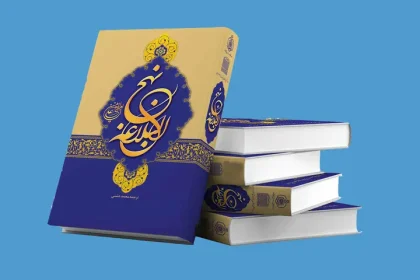


Publication of the book: “The Psychology of Positive Relationships: An Islamic Approach to Human Bonds”
Authored by Ali Sadeghi Seresht, the book The Psychology of Positive Relationships: An Islamic Approach to Human Bonds has been published in Persian. Comprising 452 pages, the volume was released in 2025 in collaboration with Dar al-Hadith Publications.
Interpersonal relationships constitute one of the most fundamental components of an individual’s personal and social life, serving as the cornerstones for the development of well-being, flourishing, and mental health. A substantial portion of the human lived experience is constructed within the context of interactions with others. Consequently, interpersonal relationships have assumed a pivotal role—not only in the etiology of psychological pathologies and disorders but also in conceptualizing the “good life” and attaining enduring well-being. Thus, every individual’s life is inextricably interwoven into a network of relationships; these connections can either serve as wellsprings of joy, meaning, and tranquility, or degenerate into sources of psychological exhaustion.
In recent years, particularly with the proliferation of positive psychology, the psychological paradigm has transcended its traditional, exclusive focus on pathology and clinical intervention, shifting instead toward identifying and cultivating the positive attributes of human existence. Within this framework, “positive relationships”—recognized as a quintessential component of well-being and flourishing—have emerged as a critical nexus between social psychology and positive psychology, thereby attracting exponentially growing scholarly attention.
Employing a psychological approach grounded in profound Islamic teachings, this book elucidates the mechanisms underlying these dynamics, offering insights into the cultivation of thriving and deeply fulfilling human bonds.
Written in lucid prose, the present volume integrates the latest empirical findings of positive psychology with religious wisdom to synthesize a practical framework for fostering affection, mutual respect, and trust. This is a trajectory that not only facilitates individual flourishing but also contributes to the actualization of a more compassionate and psychologically robust society.
Drawing upon the advancements of contemporary psychology—specifically positive and social psychology—this work endeavors to provide a systematic framework for elucidating positive interpersonal relationships. Subsequently, grounded in primary Islamic sources, it formulates the foundational tenets, principles, and conceptual models of positive relationships from an Islamic perspective. This approach is designed to facilitate rigorous scientific dialogue between psychology and Islamic epistemic traditions, thereby establishing a solid foundation for its pedagogical and research applications.
In alignment with this methodological approach, the present research is structured into three distinct sections comprising nine chapters, detailed as follows:
- Section One: General Outlines of Positive Interpersonal Relationships
- Chapter 1: Constituent Elements of Positive Interpersonal Relationships
- Chapter 2: Principles of Positive Interpersonal Relationships
- Chapter 3: The Relationship Between Culture and Positive Interpersonal Relationships
- Chapter 4: Positive Interpersonal Relationships and Personality
- Section Two: Theories in Human Relationships
- Chapter 5: Psychological Theories in Explaining Interpersonal Relationships
- Chapter 6: Ethical Approaches in Explaining Interpersonal Relationships
- Section Three: Positive Interpersonal Relationships from an Islamic Perspective
- Chapter 7: Intellectual Systems and Psychological Dimensions of Positive Relationships in Islam
- Chapter 8: Explanations and Theoretical Foundations of Positive Relationships in Islam
- Chapter 9: The Model of Positive Interpersonal Relationships in Islamic Sources This work contributes to the study of The Psychology of Positive Relationships.