Tag: Artificial intelligence

RISE Articles 7
Islamic Rational Sciences Thesauri Unveiled

Unveiling of Two New Thesauri of Islamic Rational Sciences Featuring Over 5,800 Specialized Terms

The Research Center of the Encyclopedia of Islamic Rational Sciences has unveiled two thesaurus websites and 50 volumes of reference books on Islamic rational sciences during a formal ceremony. The unveiling includes the “Website of Islamic Rational Sciences Terminology” and the “Website of Figures and Works of Islamic Rational Sciences,” alongside 50 scholarly works. Notable […]

Chat with Book AI for Islamic Studies

Unveiling of the Intelligent “Chat with Book” System: Transforming Islamic Studies Research via Artificial Intelligence and the Analysis of 138,000 Volumes

Mohammad Hossein Bahrami, Head of the Computer Research Center of Islamic Sciences (CRCIS, also often called the Noor Research Center), announced the pioneering implementation of deep-search artificial intelligence within the intelligent “Chat with Book” system (listed on the English site as the “Artificial Intelligence” feature) on February 14, 2026. Speaking at the unveiling ceremony during […]

Jurisprudential Issues in Artificial Intelligence

The Jurisprudential Formulation of Artificial Intelligence: An Endeavor to Address Emerging Technological Challenges

The book A System of Jurisprudential Issues Regarding Artificial Intelligence, authored by Abdolhojjat Haghjou, has been published under the auspices of the Art and Media Jurisprudence Department at the Aemmeh Athar Fiqh Center. Aimed at advancing jurisprudential studies in the realm of modern technologies generally and addressing jurisprudential issues in Artificial Intelligence specifically, this work […]

RISE Journal Pilot Issue 2

RISE Journal Pilot Issue 2 (Winter 2026) – Complete Overview

Issue Overview Page RISE: Second Pilot Issue 📄 View PDF Issue   RISE Journal Pilot Issue 2 – INTRODUCTION: A Century of Intellectual Transformation Welcome to the landmark RISE Journal Pilot Issue 2 (Winter 2026), a comprehensive exploration of the Qom Seminary’s centennial journey and its profound impact on contemporary Islamic thought. This issue serves […]

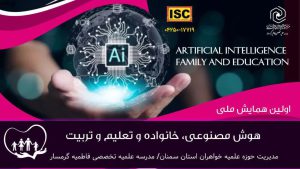
artificial intelligence family and education

Exploring Opportunities and Challenges of Family and Education in the Age of Artificial Intelligence

The First National Conference on “Artificial Intelligence, Family, and Education” will be held on February 14, 2026, organized by the Women’s Seminaries Administration of Semnan Province in collaboration with the Fatemiyeh Specialized Seminary School, located in Garmsar. This scholarly event is designed to examine the interaction between contemporary AI technologies and family, upbringing, and education, […]

Religion, Culture, and Technology in the Age of Artificial Intelligence

Religion, Culture, and Technology in the Age of Artificial Intelligence

The Second International Conference on “Religion, Culture, and Technology”, with a focus on cyberspace and artificial intelligence, will take place on May 4–7, 2026, hosted by Baqir al-Olum University in collaboration with Sharif University of Technology and the University of Tehran, and held in both Qom and Tehran. This scholarly event is designed to examine […]

First National Conference on Digital Islamic Sciences and Humanities (Qom)

First National Conference on Digital Islamic Sciences and Humanities (Qom)

The First National Conference on Digital Islamic Sciences and Humanities will be held in Qom on October 9, 2025, organized by the Computer Research Center of Islamic Sciences (Noor) and the Research Institute for Digital Islamic Sciences and Humanities. The organizers emphasized that the primary aim is to develop and institutionalize interdisciplinary studies at the […]

Scholaria Contributions 1

Technology: A Blessing for Research, or a Curse for…?!

This article critically examines the dual impact of modern technology on academic research. While educational technologies are profound divine blessings that facilitate knowledge, they also pose a grave threat when misused as tools for laziness. Highlighting the stark contrast between the iron resolve of past scholars and contemporary reliance on AI for fabricating research, the author calls for strict governance to prevent a severe crisis in human knowledge.