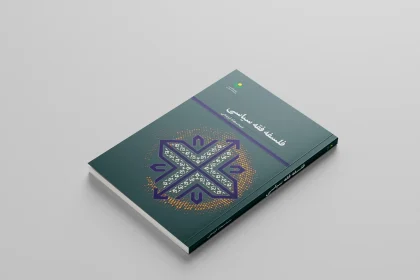

The book Happiness as a Human End in the Thought of Thomas Aquinas and Neo-Sadraic Philosophy, authored in Persian by Seyyed Mohammad Javad Bani-Saeed Langroudi, has been published in 235 pages by Naqd-e Farhang Publications.
This work is a specialized research endeavor in the fields of comparative philosophy and Islamic theology. It examines the concept of ultimate human happiness or felicity as the supreme end of human life from the perspectives of two major intellectual traditions: the Scholastic philosophy of Thomas Aquinas and the Transcendent Philosophy of Sadr al-Mutahallihin Shirazi (Mulla Sadra). Employing a comparative approach, the book endeavors to elucidate the similarities and differences between these two philosophical-theological systems in defining the ultimate goal of humanity. This work will appeal to scholars of Islamic philosophy, Western philosophy, and those interested in moral philosophy and eudaimonology.
In this book, the author first articulates the anthropological, epistemological, and ontological foundations of each philosopher, and subsequently analyzes the position of the concept of “happiness” within their intellectual frameworks based on these foundations. In the section concerning Aquinas, emphasis is placed on the roles of natural reason, moral and intellectual virtues, and ultimately the beatific vision of God as the ultimate happiness. In the section on Neo-Sadraic philosophy, centered on the thought of Mulla Sadra, true human happiness is defined through the evolutionary trajectory of human existence, the unity of the intellect and the intelligible, and the attainment of immateriality and divine proximity. Moving beyond mere concepts, the author conducts a comparative examination of the mechanisms for achieving this end and the obstacles associated with it within both intellectual systems.
As a serious study in the realm of dialogue between Islamic and Christian philosophy, this work represents a step toward a more profound understanding of the Peripatetic and Illuminationist heritage in convergence with the Thomistic tradition. The strengths of the book lie in its coherent formulation of the problem, reliance on primary texts, and its effort to establish a structured comparative framework. Above all, this book is highly beneficial and illuminating for advanced students and researchers of philosophy and theology, particularly those engaged in comparative philosophy and normative ethics.