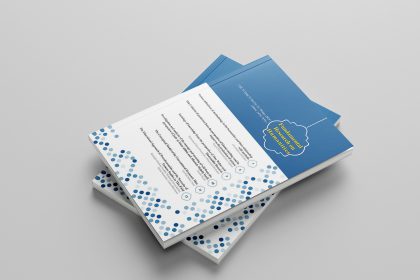

The book Foundations of Islamic Humanities from the Perspective of Ayatollah Javadi Amoli, authored in Persian by Mohammad-Ali Savadi, has been published as an analytical research work by the Research Institute for Islamic Culture and Thought. Spanning 515 pages, the book provides a systematic examination of the epistemological and methodological foundations of Islamic humanities, drawing upon the perspectives of Ayatollah Javadi Amoli.
Adopting an academic approach, this work seeks to elucidate the role of revelatory sources-particularly the Holy Quran-as the most fundamental cornerstone in the formation of Islamic humanities. Emphasizing this perspective, the author argues that all domains of the humanities, including historical research, require reliance on Quranic teachings as a rich, authentic, and guiding source.
Portions of the book’s introduction highlight the strategic role of Quranic narratives in understanding the “philosophy of history.” Accordingly, the Quranic accounts of the prophets’ lives are not viewed merely as literary tales, but rather as reflections of real, revelatory events that can aid in discovering “divine laws of history” and the laws governing the evolution of human societies. This approach positions Quranic narratives as an analytical resource for extracting overarching principles of human epistemology and pedagogy.
Furthermore, by citing verses from the Quran, the book emphasizes the truth and validity of revelatory propositions, positing them as a reliable foundation for theorizing within the humanities. Within this framework, the concept of Ahsan al-Qasas (the best of narratives) is highlighted as an indicator of the epistemological and aesthetic richness of Quranic stories, analyzed as a manifestation of divine wisdom in elucidating history and human society.
Ultimately, this work can be regarded as a step toward the systematization of Islamic humanities. By integrating philosophical and exegetical approaches, it endeavors to provide a theoretical framework for re-evaluating the humanities based on religious teachings.