

Tag: Mahdism

RISE Articles 3
The Evolution of Orientalist Perspectives on Mahdism

The Evolution of Orientalist Perspectives on Mahdism in the Past 150 Years

This is a reading of the article “Orientalist Perspectives on Mahdism,” originally published in the first Preinaugural issue of RISE journal. The text critically examines how Western scholars have historically analyzed and interpreted the Islamic doctrine of the Mahdi. The article explores the tendency of early Orientalists to view Mahdism primarily through a sociopolitical and […]

Seminar on “The Middle East as the Civilizational Arena of East and West”

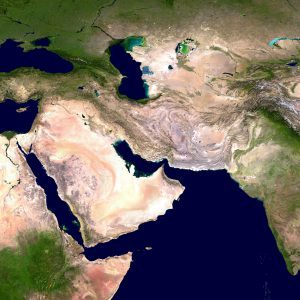
Seminar on “The Middle East as the Civilizational Arena of East and West”

The 174th session of the Monthly Mahdavi Culture Seminar Series on“The Middle East as the Civilizational Arena of East and West” was held online on Thursday, 17 July 2025. The main lecture was delivered by Esmaʿil Shafiʿi Sarvestani, writer, journalist, and researcher of Mahdism and eschatology. His presentation examined the distinct significance of the Middle […]

The Evolution of Orientalist Perspectives on Mahdism in the Past 150 Years

The Evolution of Orientalist Perspectives on Mahdism in the Past 150 Years

  Introduction Western scholars have long shown interest in Islamic topics for various reasons and purposes, engaging in research and offering perspectives on the beliefs and traditions practiced among Muslims. These studies and writings, whose origins can be traced back to the period following the Muslim conquest of al-Andalus and even earlier, came to be […]

Scholaria Contributions 1

How Did Imam al-Askari (a.s.) Preserve the Light of the Imamate Under Abbasid Confinement?

From the perspective of Shiʿi historiography, following the martyrdom of Imam al-Hadi (a.s.) and throughout the brief tenure of Imam al-Askari’s (a.s.) imamate, the Shiʿi community was confronted with severe security crises and absolute confinement. This essay examines how Imam al-Askari (a.s.) preserved the cohesion and resilience of the Shiʿi community during that critical juncture. It argues that through the strategic use of the established deputyship network, leveraging the community’s doctrinal maturity, and implementing foundational measures to prepare for the Era of Occultation, the Imam effectively neutralized the Abbasid caliphate’s oppressive machinations and ensured the continuity of the Imamate’s light.