
The Research Center of the Encyclopedia of Islamic Rational Sciences has unveiled two thesaurus websites and 50 volumes of reference books on Islamic rational sciences during a formal ceremony.
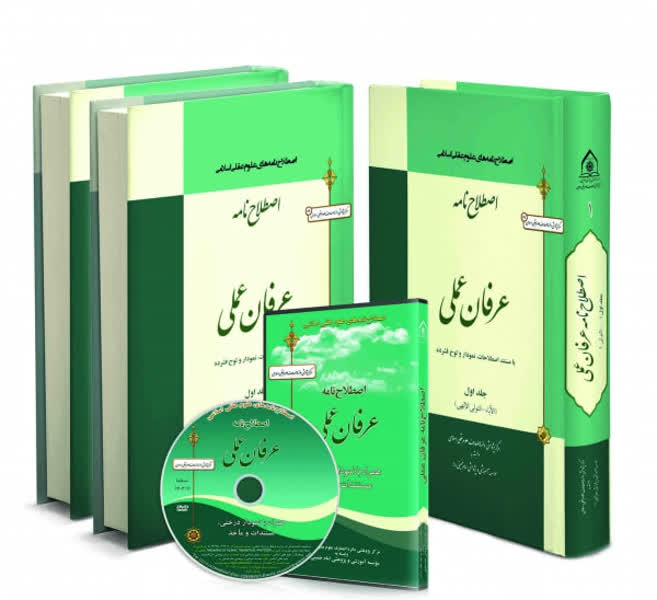
The unveiling includes the “Website of Islamic Rational Sciences Terminology” and the “Website of Figures and Works of Islamic Rational Sciences,” alongside 50 scholarly works. Notable titles among these include:
- “The Comprehensive Map and Thesaurus of Practical Mysticism,”
- “The Comprehensive Map and Thesaurus of the Epistemology of Mysticism,”
- “The Comprehensive Thematic Dictionary of Mystical Sources,”
- “The Compendium of the Rules of Islamic Rational Sciences,”
- “The Comprehensive Thematic Dictionary of Logical Sources,”
- “The Comprehensive Thematic Dictionary of Islamic Philosophy Sources,”
- “The Comprehensive Thematic Dictionary of Islamic Theology Sources,”
- “The Detailed Bibliography of the History of Theology,”
- “The Detailed Bibliography of Latin Sources on Mysticism,”
- “Entries of the Encyclopedia of Islamic Rational Sciences,” and
- “The Catalog of Manuscripts.”
The ceremony was held on February 16, 2026, featuring the presence and keynote addresses of Ayatollah Mahmoud Rajabi, President of the Imam Khomeini Education and Research Institute, and Ayatollah Yadollah Yazdanpanah, a prominent professor of philosophy and mysticism at the Qom Seminary.
Mohammad Karimi, Deputy Director of the Encyclopedia of Islamic Rational Sciences Center at the Imam Khomeini Institute, stated during the unveiling ceremony: “Thesauri play the most fundamental role not only in research but in all the endeavors of this center. Scientific dossiers, encyclopedia entries, and thematic dictionaries are all fundamentally built upon these thesauri.”
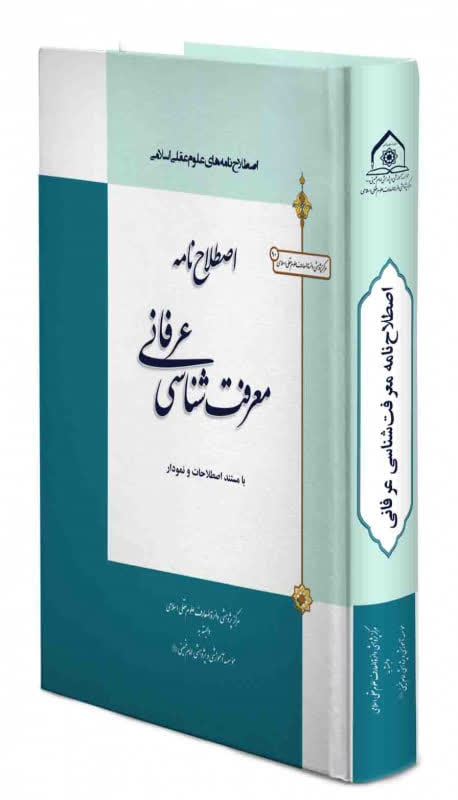
Hujjat al-Islam Karimi added, “The two thesauri unveiled today follow the 13 previously unveiled thesauri related to 13 scientific disciplines. Approximately two more thesauri remain, which, God willing, will be unveiled next year. The ‘Practical Mysticism’ thesaurus has been compiled in three volumes containing approximately 4,860 terms, and the ‘Epistemology of Mysticism’ thesaurus in one volume with over a thousand terms. The core structure of this thesaurus is based on the spiritual journey and wayfaring (sayr wa sulūk). In addition to terminology, wayfaring systems have been documented, and the center’s researchers have compiled and conducted comparative studies among these various systems.”
Regarding the Epistemology of Mysticism thesaurus, he noted: “This thesaurus was inspired by mysticism itself and revolves around the triad of ‘Knowledge, the Known, and the Knower’ (maʿrifat, maʿrūf, wa ʿārif), developed under the guidance of Professor Yazdanpanah. Since there was no pre-designed system in the field of mystical epistemology, researchers initially extracted various frameworks—such as the systems of intuition (shuhūd), spiritual unveiling (kashf), and mystical taste (dhawq)—based on the terms themselves. They subsequently aligned these systems with one another, ultimately arriving at a unified framework. This process involved extensive scholarly deliberation and was conducted under the direct supervision of the professor.”
In another segment of his address, Karimi referred to the aggregation of the keywords and indexes of Islamic rational sciences, stating: “All indexes found in tables of contents, glossaries, summaries, and abstracts have been aggregated and harmonized. They are now presented across four disciplines: mysticism, theology, philosophy, and logic. In the field of mysticism, 8 out of 11 primary sources have been examined, yielding approximately 11,000 keywords and 170,000 academic subjects, which have been systematically organized by eliminating duplicates.”
Touching upon the topic of artificial intelligence, he remarked: “Researchers at this center are striving to utilize these datasets for AI applications. This initiative will be highly beneficial, particularly for academic article writing, as all relevant content associated with each specific term is explicitly defined.”