
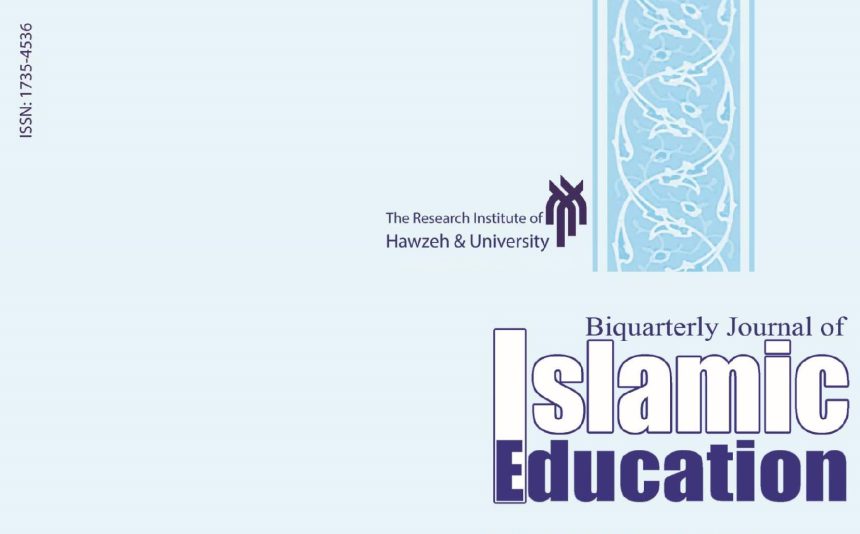
The Quarterly Journal of Islamic Education has issued a call for papers for a special issue titled “Philosophical Counseling,” focusing on an Iranian-Islamic approach.
In recent years, “Philosophical Counseling” has emerged as a novel yet rapidly expanding field, securing a new position within philosophical, educational, and interdisciplinary studies. Relying on reflective, methodical, and rational dialogue, this field strives to assist contemporary individuals in examining their fundamental questions regarding meaning, value, decision-making, identity, ethics, and ways of living through a deeper and more conscious approach.
Alongside the global growth of this movement, the Islamic philosophical tradition—ranging from Peripatetic (Mashsha) philosophy to Illuminationist (Ishraq) and Transcendent Theosophy (Hikmat-e Muta’aliyeh)—also boasts a long history of dialogue, reasoning, rational education, and the formulation of fundamental questions. This heritage can provide valuable capacities for the indigenous formulation of philosophical counseling, while simultaneously benefiting from recent achievements in applied philosophy, analytic philosophy, existentialism, and other contemporary approaches.
The scientific journal of Islamic Education intends to publish a special issue on philosophical counseling with an Iranian-Islamic approach in 2026. This special issue endeavors to create a platform for bridging these two domains: the Islamic philosophical tradition and global developments in philosophical counseling. The objective is for such research to enrich the theoretical depth of this field while revealing new possibilities for its application and development in Iran. Welcoming theoretical, analytical, comparative, and applied research, this special issue seeks to establish a clear vision for philosophical dialogue within educational, cultural, and social contexts.
Themes of Philosophical Counseling with an Iranian-Islamic Approach Include:
1. Foundations
- The nature, identity, and objectives of philosophical counseling.
- Philosophical anthropology, epistemology, and ethics in philosophical counseling.
- The relationship between philosophical counseling and practical wisdom, Islamic ethics, and spiritual education.
- The capacities of Islamic philosophy (Al-Farabi, Avicenna, Suhrawardi, Mulla Sadra, etc.) for therapeutic philosophical dialogue.
2. Islamic Models and Approaches in Philosophical Counseling
- Re-reading mystical teachings (e.g., the Masnavi, Golshan-e Raz, Illuminationist wisdom, Ibn Arabi’s mysticism) for counseling purposes.
- The application of concepts such as spiritual vigilance/meditation (muraqabah), self-reckoning (muhasabah al-nafs), moral purification (tahzib-e akhlaq), and wisdom-based education (tarbiyat-e hikmi) in counseling.
- The feasibility of designing an “Indigenous Model of Philosophical Counseling” based on Iranian culture, the Persian language, and Islamic wisdom.
3. Interdisciplinary Interactions
- The relationship between philosophical counseling and psychotherapy, educational counseling, and mental health.
- Points of convergence and divergence between philosophical and psychological methods.
4. Applied Areas
- Philosophical counseling in education (the classroom, life skills, moral education).
- The application of philosophical counseling in the family, marriage, child-rearing, and life decision-making.
- The role of philosophical counseling in addressing the search for meaning, as well as identity and generational crises.
- Philosophical counseling and the meaning of life.
- Philosophical counseling and leadership, management, and decision-making.
- Philosophy in negotiation, conversation, dialogue, and intercultural dialogue.
- Philosophical counseling and self-awareness, self-knowledge, and living wisely.
- The role of philosophy in critical thinking, creativity, and problem-solving.
- Philosophical counseling and the management of anger, emotion, and suffering.
- Philosophical counseling in interpersonal and family relationships, and the issue of loyalty/betrayal.
- The application of philosophy in education, upbringing, and mental hygiene.
- The importance and role of philosophical counseling in promoting well-being, spiritual health, and regulating relationships with others.
5. Critique and Futures Studies
- A critical review of Western approaches (logic-based, existential, dialogical, semantic, deep contemplation, etc.).
- Futures studies of philosophical counseling: challenges, capacities, and developmental trajectories.
Dr. Mohammad Davoudi serves as the Editor-in-Chief. Other members of the editorial board include: Dr. Saeed Beheshti, Dr. Khosrow Bagheri, Dr. Masoud Janbozorgi, Dr. Seyed Mehdi Sajjadi, Dr. Seyed Hamidreza Alavi, Dr. Mahmoud Nozari, Dr. Seyed Ali Hosseinizadeh, and Dr. Ali Naghi Faghihi.
The international editorial board members are: Holger Daun, Ibrahim Aslamachi, Arefeh Gumush Sari, Muhammad Naeem Butt, Mohamed Sobhi Ibrahim, Akbar Husain, Engie Moussa, and Hassan Qassir.
Scholars, professors, researchers, and Ph.D. candidates may submit their articles through the journal’s website at: https://islamicedu.rihu.ac.ir/?lang=en