Tag: Islamic political thought

RISE Articles 4
Quranic political system and the State

Publication of a Book on the Political System and the State in the Holy Quran: An Elucidation of the Theory of the Monotheistic Wilayah-Based Order

The book The Political System and the State in the Holy Quran, authored in Persian by Najaf Lakzaee, has been published by the Islamic Sciences and Culture Academy in 327 pages. This work examines the foundations of the Quranic political system and the structure of the state within Islamic thought. According to the provided overview, […]

Speeches about Freedom: Islamic & Western Political Thought

Speeches about Freedom: Islamic & Western Political Thought

The book Speeches about Freedom, written in Persian by Hassan Majidi and his collaborators, has been published in 380 pages by Imam Sadiq University Press. “Freedom,” alongside “independence” and the “Islamic Republic,” constitutes one of the fundamental slogans and ideals of the Islamic Revolution. With the aim of contributing to the formation of an intellectual […]

political socialization in Nahj al-Balāgha

The Role of Government in Political Socialization: A Fresh Study by the Research Institute of Hawzah and University (RIHU)

In June 2025, the Research Institute of Hawzah and University published The Role of Government in Political Socialization from the Perspective of Nahj al‑Balāgha, authored by Mohammad Kazem Karimi. This 320‑page scholarly‑analytical work investigates the role of government in the process of political socialization of members of society, whereby political and social values and beliefs […]

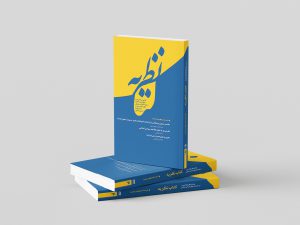
Volume Six of Kitāb-i Naẓariyyih Published

Volume Six of “The Book of Theory” Published

The sixth volume of Kitāb-i Naẓariyyih (The Book of Theory), comprising 170 pages, has been published in Persian by the Sadra Research Center for Humanities and Islamic Studies. The Book of Theory serves as a high-level scholarly platform, supervised by a high council of scientific review. Through rigorous multi-stage evaluations based on clearly defined scholarly […]

Scholaria Contributions 3

How Did Imam al-Askari (a.s.) Preserve the Light of the Imamate Under Abbasid Confinement?

From the perspective of Shiʿi historiography, following the martyrdom of Imam al-Hadi (a.s.) and throughout the brief tenure of Imam al-Askari’s (a.s.) imamate, the Shiʿi community was confronted with severe security crises and absolute confinement. This essay examines how Imam al-Askari (a.s.) preserved the cohesion and resilience of the Shiʿi community during that critical juncture. It argues that through the strategic use of the established deputyship network, leveraging the community’s doctrinal maturity, and implementing foundational measures to prepare for the Era of Occultation, the Imam effectively neutralized the Abbasid caliphate’s oppressive machinations and ensured the continuity of the Imamate’s light.

Ashura: From Historical Narrative to the Contemporary World

This essay explores the foundational philosophy of Imam Husayn’s uprising by analyzing the geopolitical and social transition from Mu’awiya to Yazid. It outlines seven distinct axes—encompassing theological legitimacy, religious and customary transgressions, and the violation of established treaties—to demonstrate that the Ashura movement was not a mere political dispute. Rather, it was a necessary and calculated endeavor to preserve Islamic principles, prevent institutional deviation, and awaken public consciousness.